5 Hospitality Trends Redefining the Guest Experience in 2026
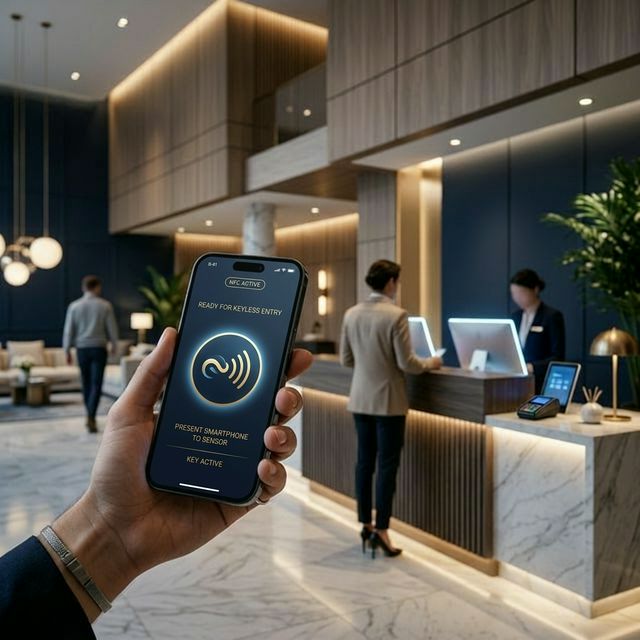
From AI-powered bookings to digital wallet loyalty, discover the 5 data-backed trends redefining the guest experience in 2026 — and what they mean for your property.
Your next guest has already decided where they're staying. They just haven't booked yet. The window between intent and decision is shrinking — and the systems that influence it are changing faster than most operators realise. AI is now sitting between your property and your future guests. Loyalty mechanics built a decade ago are actively driving guests away. And 59% of returning guests walk up to your front desk and aren't recognised. These aren't predictions. They're happening now. Here's what the data says — and what it means for your property in 2026.
Trend 1: AI is becoming the first point of contact between guests and hotels
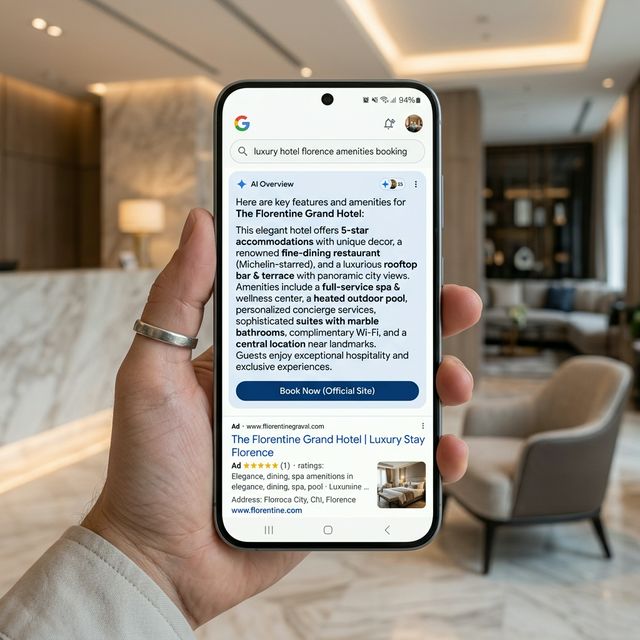
Generative AI is no longer a back-office efficiency tool — it is now sitting between your hotel and your future guests. Research shows that 3% of Google hotel searches already surface AI-generated overviews, a figure growing month over month. More significantly, agentic AI travel assistants — tools that don't just recommend but actually book — are moving from early adoption into mainstream use.
tiketo passes carry structured guest data that feeds directly into AI discovery pipelines — making your property visible and bookable at the moment intent is highest.
What this means for you: If your property's data isn't structured, open, and machine-readable, AI systems will either misrepresent you or skip you entirely. Hotels that invest in structured data, open APIs, and bookable ancillaries in 2026 will capture a disproportionate share of AI-mediated bookings. Those that don't will find their direct booking channel quietly eroding.
Trend 2: Loyalty programme value is collapsing — and guests know it
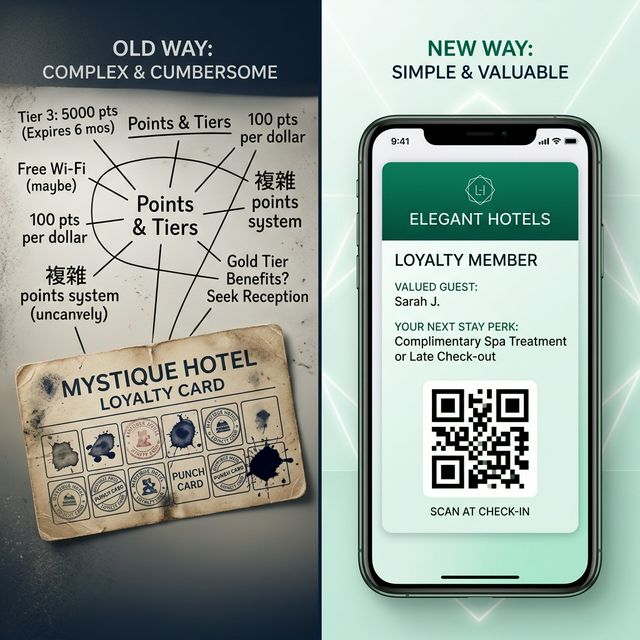
Guest loyalty is under pressure from both sides. Half of loyalty programme members say their programmes no longer deliver meaningful value. Meanwhile, acquiring a new guest costs an estimated 5–7x more than retaining an existing one. The economics are unambiguous: loyalty retention is one of the highest-ROI investments a hotel can make — yet most loyalty mechanics are broken. The shift happening now is away from points-and-tiers models toward real-time, contextual engagement. Guests don't want to accumulate points for a future redemption they may never use. They want recognition now — at check-in, during their stay, and in the weeks after departure.
What this means for you: The hotels winning on loyalty in 2026 are delivering personalised, timely engagement through channels guests already use — not proprietary apps that most guests never download. Apple and Google Wallet are installed on effectively every smartphone. That's your loyalty channel.
Trend 3: Returning guests go unrecognised at an alarming rate
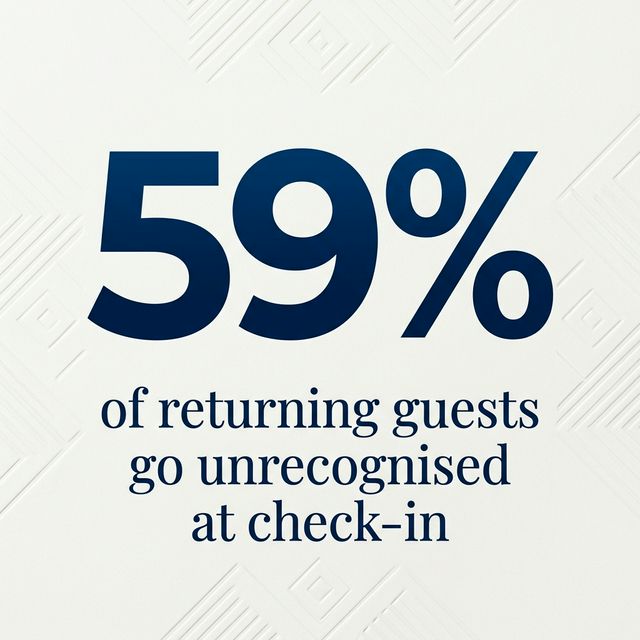
This statistic should stop every operator: 59% of returning guests are not recognised at check-in. Of those, 20% don't return. This isn't a marketing problem. It's an operational data problem — and it's costing the industry billions in preventable churn. The recognition gap exists because guest data lives in silos: the PMS holds booking history, the F&B system holds spend data, the spa holds preference notes — and none of it surfaces to the front desk agent in a usable format at the moment it matters.
tiketo digital passes give your team real guest context before they reach the desk — and give guests a reason to return after they leave.
What this means for you: Solving the recognition gap requires a single, portable guest profile that travels with the guest — not one locked in a back-end system. Properties that close this gap in 2026 will see measurable lifts in both repeat visit rate and average spend per stay.
Trend 4: Automation is reshaping hotel operations — but the human moment isn't going away
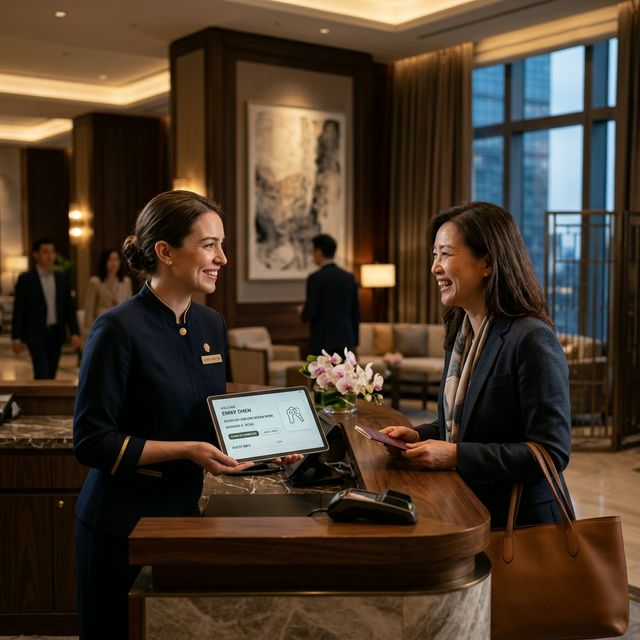
Guest communications and housekeeping coordination are the first operational areas hoteliers are automating — and for good reason. Both involve high volume, repetitive tasks where speed and consistency matter more than personal touch. But the data reveals something more nuanced: 76% of hospitality experts agree that guests don't care whether a service is delivered by a human or a system — as long as it's fast and personalised. This reframes the automation question entirely. The goal isn't to replace staff — it's to remove the transactional burden from staff so they can own the moments that actually build loyalty: the warm welcome, the proactive upgrade, the personal farewell.
What this means for you: Automation and human warmth aren't in tension. They're a workflow. Hotels that get this right in 2026 will run leaner operations while simultaneously increasing guest satisfaction scores.
Trend 5: Your PMS is evolving into the central nervous system of your hotel
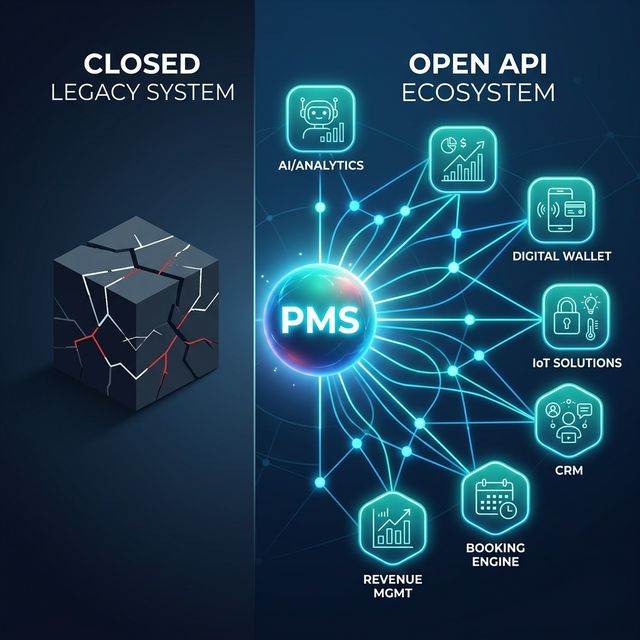
The property management system used to be a reservation database. In 2026, it's becoming the orchestration layer for the entire guest journey — connecting AI tools, staff workflows, guest communications, and loyalty mechanics into a single operating system. Hotels running on modern, API-open PMS platforms are moving faster on every dimension covered in this post: AI adoption, personalisation capability, loyalty performance, and operational efficiency. Hotels on legacy systems aren't just slower — they're structurally blocked from implementing the guest experiences that are quickly becoming the baseline expectation.
tiketo integrates with your existing PMS and guest data stack in under 24 hours — no IT project, no disruption.
What this means for you: Your technology stack is now a competitive differentiator, not just an operational necessity. The question isn't whether to modernise — it's how fast you can do it without disrupting current operations.
Closing Insight

These five trends share a single throughline: the hotels that will outperform in 2026 are those that treat guest data as a strategic asset, close the gap between back-end intelligence and front-facing experience, and engage guests through channels that actually reach them. The gap between early movers and late adopters is measurable today. In 12 months, it will be structural. If you want to see where your property sits across these five dimensions — and where tiketo fits into the picture — a 15-minute conversation is usually enough to make it concrete.
Frequently Asked Questions
Q: What are the biggest hospitality trends in 2026?
A: The five trends shaping hospitality in 2026 are AI-mediated bookings, wallet-native loyalty, the returning guest recognition gap, intelligent automation, and the evolution of the PMS as an operational hub.
Q: How is AI changing hotel bookings?
A: AI travel assistants are increasingly making booking decisions on behalf of guests. Hotels with structured, machine-readable data are favoured by these systems — making data strategy a direct driver of booking volume.
Q: What is wallet-native loyalty for hotels?
A: Wallet-native loyalty uses Apple Wallet and Google Wallet — already installed on virtually every smartphone — as the delivery layer for hotel loyalty programmes, replacing proprietary apps with near-universal reach.
Q: How can hotels improve returning guest recognition?
A: By building portable guest profiles that surface actionable context to front-desk staff at the moment of check-in, rather than leaving data siloed across PMS, F&B, and CRM systems.
Q: Is hotel automation replacing hospitality jobs?
A: No — the data suggests automation is removing transactional tasks so staff can focus on high-value emotional moments that drive loyalty.
More from the tiketo Blog
How to Build a Hotel Loyalty Program Without a Big Tech Budget
Independent hotels don't need enterprise software to run a loyalty programme. Here's a practical, right-sized framework — built on a wallet pass.
How Mobile Wallet Passes Increase Direct Bookings for Hotels
OTAs take 15–30% per booking. Here's how mobile wallet passes shift guests to direct — and keep them there. A practical guide for independent hotels.
Mobile Check-In, Room Keys & Loyalty in One Pass: Is It Possible?
Can one digital hotel pass handle check-in, room key access and loyalty? Here's the honest answer — what's possible today, what needs hardware, and how to start.
Google Wallet Hotel Passes: The Complete Hospitality Guide
Everything hotel teams need to know about Google Wallet passes — pass types, push notifications, geo-triggers & real results. Powered by tiketo.
Apple Wallet for Hotels: How to Engage Guests Without an App
Apple Wallet is on every iPhone. Yet most hotels use it for one thing: a room door key. The pass — Apple's most powerful hospitality capability — is going almost entirely unused. Here's the full picture.
Push Notifications vs. Email: Which Works Better for Hotel Guest Communication?
If you manage guest communications at a hotel, there is a good chance you are making channel decisions based on email open rate data that is significantly inflated.
How to Personalise the Hotel Guest Experience at Scale
71% of hotel brands say personalisation is a priority, but only 15% believe they are doing it effectively. Discover a practical framework for bridging the execution gap without a full CRM overhaul.
How La Bottega Turns Guests Into Regulars.
Like many successful restaurants, La Bottega faced a familiar challenge: guests loved the experience, but paper loyalty cards weren't enough.
What Is a Digital Guest Journey and How to Map It for Your Hotel
Most hotels can describe what happens at check-in. Far fewer can describe what happens in the twelve touchpoints before a guest arrives, or the eight that follow after checkout. That gap is exactly what a digital guest journey map is designed to close.
Why Guests Don't Download Hotel Apps — And What to Do Instead
Over 70% of guests drop off before completing hotel app registration. Here's why — and the no-download alternatives that actually work.
Loyalty Programs for Boutique Hotels: What Actually Works
Most boutique hotels copy chain loyalty mechanics and wonder why it fails. Here's what actually works — and why your advantage is emotional, not transactional.
The Friction of Prestige: Why Elite Golf Resorts Are Replacing Plastic Cards with Native Device Infrastructure
Traditional golf operators equate plastic cards with prestige. Discover why top-tier clubs are transitioning to native smartphone wallets to capture lost secondary revenue.