How to Build a Hotel Loyalty Program Without a Big Tech Budget
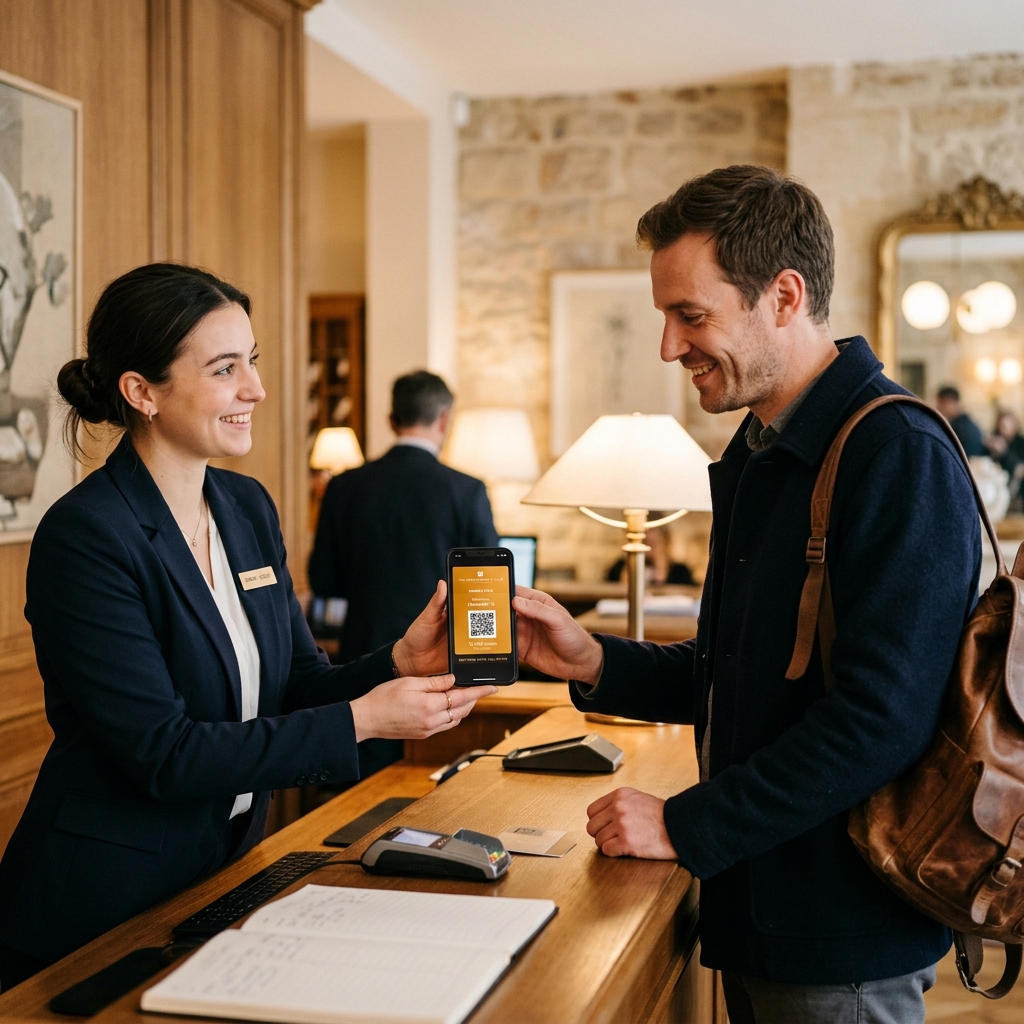
Independent hotels don't need enterprise software to run a loyalty programme. Here's a practical, right-sized framework — built on a wallet pass.
The commercial case for hotel loyalty programmes has never been stronger. Loyal guests stay 28% longer and spend 22.4% more than infrequent travellers. A 5% increase in guest retention can drive a profit uplift of up to 75%. Hotel loyalty membership grew 14.5% globally in 2024 — more than twice the rate of new room supply — confirming that the industry is investing in retention at scale. And yet the majority of independent hotels in Europe have no loyalty programme at all. The reason is not ignorance of the commercial case — most hotel GMs understand it. The reason is a misperception about what a loyalty programme requires: a CRM platform, a points engine, a branded app, a marketing team to manage it, and a budget that most independent 3–5 star properties cannot justify. This guide argues that this framing is wrong — and shows what a right-sized, commercially effective loyalty programme looks like for an independent hotel operating without enterprise infrastructure. The starting point is simpler than most GMs expect. And the delivery mechanism — a digital wallet pass — is already on the phone of most arriving guests.
Why Independent Hotels Keep Delaying Their Loyalty Programme
The standard advice for independent hotels seeking loyalty capability is to join a third-party network: Stash Rewards, The Guestbook, SLH Club, or similar. These networks pool guests across multiple independent properties, offering earn-and-burn mechanics that give individual hotels the scale they cannot achieve alone. They are legitimate options — particularly for properties with a strong leisure guest mix and limited in-house marketing resource. The limitation is that the guest relationship lives inside the network, not inside the hotel. The hotel contributes its guests to the network's database. The network retains visibility over where those guests stay next. If the guest's next stay is at another network property, the original hotel receives no data, no communication channel, and no direct relationship benefit. For an independent hotel with a distinctive product and a guest who chose it specifically — a boutique property in Ghent, a family-run hotel in San Sebastián — this dynamic represents a lost opportunity. The guest's loyalty to that specific property is genuinely strong. Channelling it through a network programme means the hotel never directly captures, communicates with, or monetises it.
The alternative: A proprietary micro-programme built on a wallet pass does not require a CRM, a branded app, or a marketing team. It requires a delivery mechanism (the pass), a defined benefit, and a post-stay re-engagement trigger. For most independent hotels, that is sufficient to capture the commercial value of loyalty without the infrastructure cost of a full programme.
Right-Sizing Your Loyalty Programme: Match Complexity to Your Repeat-Guest Rate
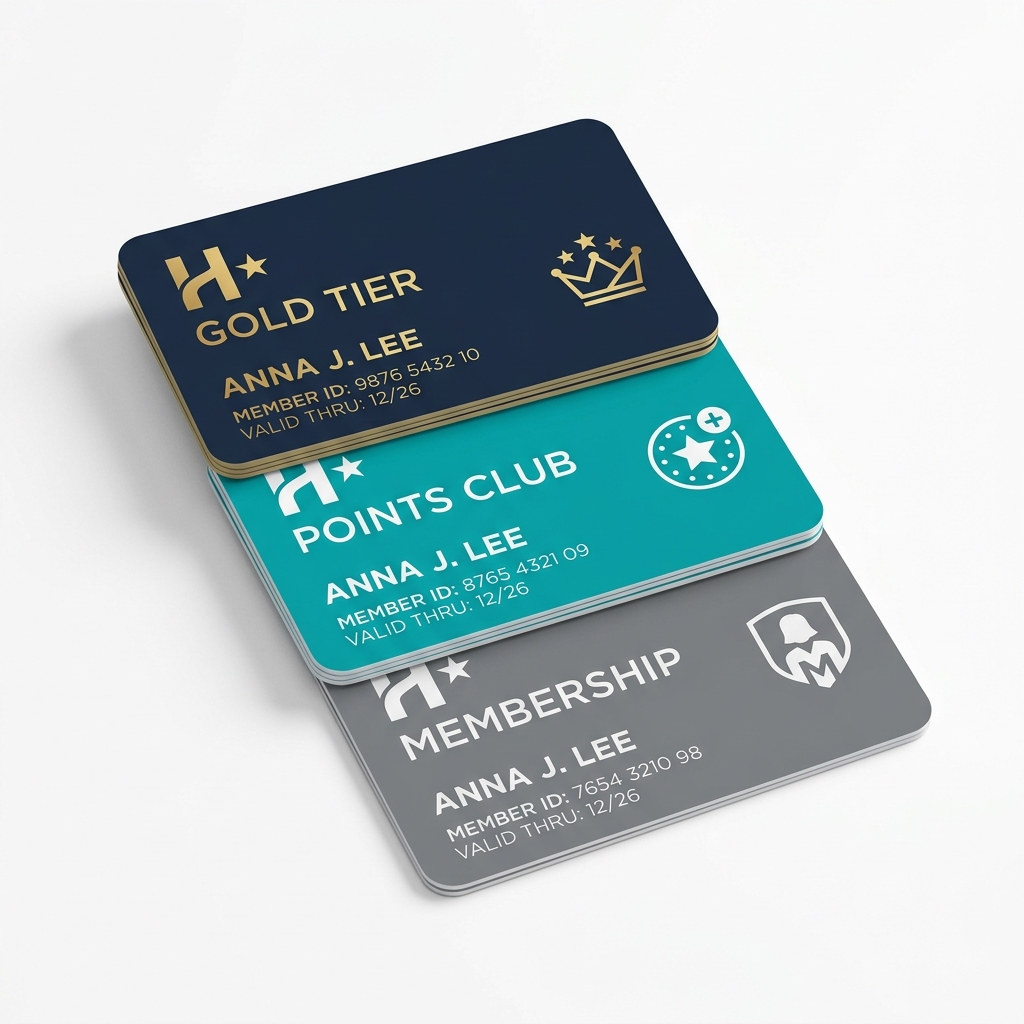
The single most important principle for independent hotel loyalty programmes is right-sizing. A hotel with a 10% repeat-guest rate does not need a tiered CRM-backed loyalty programme. A hotel with a 35% repeat-guest rate probably does. The programme structure should match the actual commercial opportunity — not aspire to a Marriott Bonvoy model that requires a multi-billion dollar operation to sustain. The table below maps three programme tiers to the commercial context that justifies each one: • **Membership (Entry level):** Requires Email opt-in, booking confirmation pass, single perk benefit. Delivers Direct booking channel, post-stay push notification, return incentive on pass. Right for Hotels with low repeat-guest rate (<15%) wanting to start building loyalty infrastructure. • **Points (Mid tier):** Requires Points tracking (PMS or simple spreadsheet), wallet pass display, redemption threshold. Delivers Points balance on pass face, milestone reward, tier progression signal. Right for Hotels with moderate repeat-guest frequency (15–30%) and a defined reward to offer. • **Tiered (Full programme):** Requires CRM or loyalty platform, multiple tiers, defined perk ladders, partner benefits. Delivers Full tier ladder, elite status recognition, partner earn/burn, direct booking acceleration. Right for Hotels with 30%+ repeat guest rate and staff resource to manage a structured programme. Most independent hotels in Spain and Benelux operate with repeat-guest rates between 15–25%. This places them firmly in the middle tier — a points-based or membership programme with a defined reward threshold and a wallet pass as the primary delivery and communication mechanism. No CRM required. No app. No dedicated loyalty team.
The Four Building Blocks of a Low-Budget Hotel Loyalty Programme
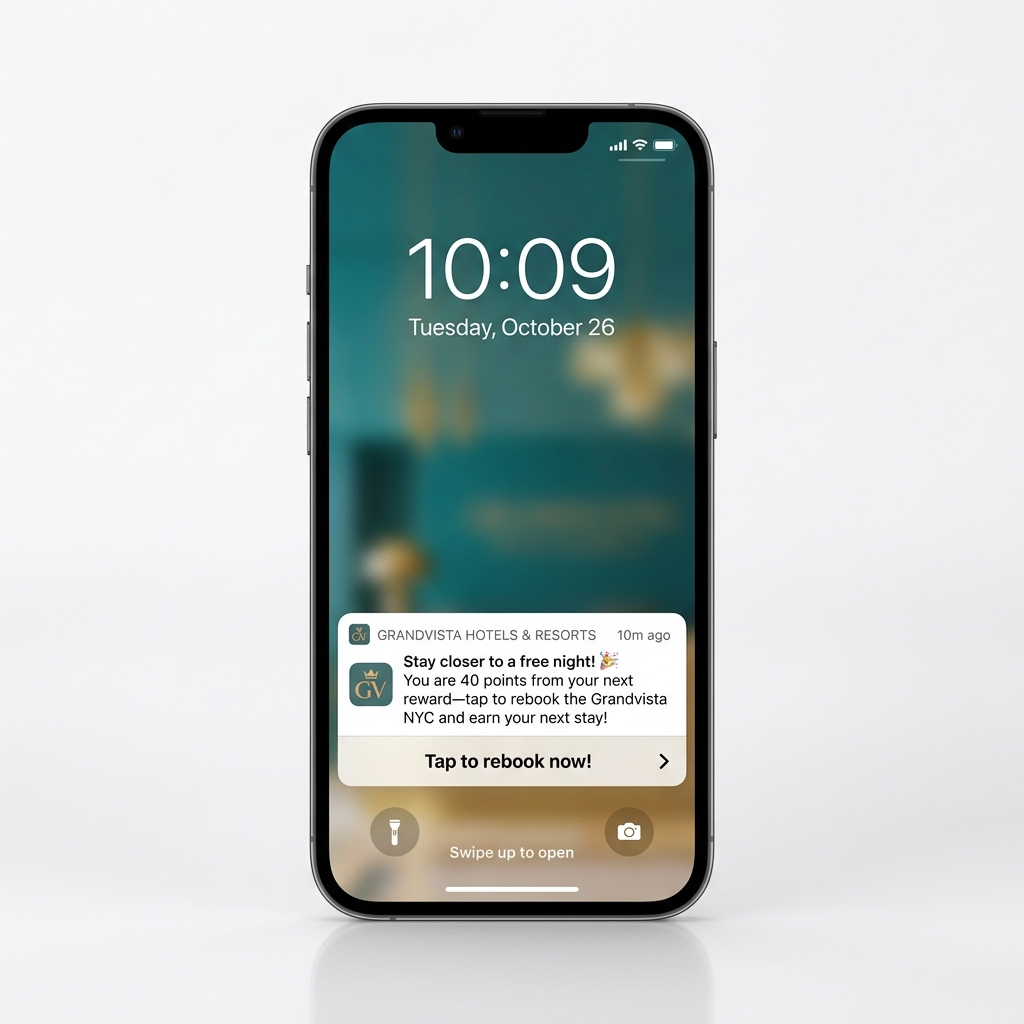
A functional independent hotel loyalty programme requires four components. Each can be implemented at a fraction of the cost of an enterprise loyalty platform, using tools most hotels already have or can access through a pass management platform such as tiketo. **Building block 1: The membership mechanism** Guests join the programme by adding a digital wallet pass at booking confirmation. The pass is the membership card. It requires no account creation, no app download, and no registration form. The guest taps 'Add to Apple Wallet' or 'Add to Google Wallet' from their booking confirmation email. From that moment they are a programme member — with a named pass, a membership number, and a persistent connection to the hotel on their device. This frictionless join mechanism is the single most important advantage a wallet-pass-based programme has over traditional loyalty registration flows, which see 70%+ drop-off at the account creation step. **Building block 2: The earn mechanism** Points are earned on direct bookings (and, optionally, on qualifying ancillary spend). The earn rate should be simple enough to communicate in one sentence: 'Earn 1 point for every euro of room revenue on direct bookings.' Points accumulate on the pass face, visible to the guest every time they open their wallet. Complexity — multiple earn rates, partner earn, credit card linkage — should be introduced only when the programme has an established member base and the hotel has the operational capacity to manage it. For hotels not yet ready to manage a points system, a simpler alternative is a visit-based benefit: 'Your third direct stay earns a complimentary room upgrade.' The pass tracks visit count. The benefit triggers automatically. No points engine required. **Building block 3: The redemption and reward** The reward should be specific, achievable, and emotionally resonant — not a generic discount. A complimentary welcome drink, a room category upgrade, a late checkout guarantee, a 15% discount on a return stay within 90 days: these are rewards that feel meaningful and personal, and that are operationally low-cost for the hotel to deliver. The redemption threshold should be reachable within two to three stays for most guests. A programme where the reward feels perpetually out of reach trains guests to disengage. A programme where a reward is genuinely achievable within a calendar year creates the compounding return-visit behaviour that drives loyalty programme ROI. **Building block 4: The post-stay re-engagement trigger** This is the component that most independent hotels miss entirely — and it is where wallet passes provide their most commercially significant advantage over email-only programmes. At checkout, the guest's stay pass converts to a loyalty pass format showing their current points balance and their next milestone. Ten days post-checkout, a push notification fires to their lock screen: 'You're 40 points from your next reward — book your return stay before 30 June.' The guest does not need to log in to a portal or check an email. The programme is visible on their device — in the same wallet as their bank cards — reminding them of the value they have accumulated and the specific action that unlocks the next benefit.
Cost reality check: These four building blocks require: a wallet pass management platform, a booking confirmation email update (a one-time template change), and a defined reward that the hotel can operationally deliver. The technology cost is a pass platform subscription. The reward cost is the incremental cost of the benefit (a welcome drink, an upgrade when availability exists) — which is typically low relative to the room revenue it protects. There is no CRM licence, no app development cost, and no dedicated loyalty team required.
Building Your Programme: A Step-by-Step Launch Plan
**Step 1: Define your repeat-guest rate.** Pull your PMS data for the last 12 months: what percentage of room nights were booked by guests who had stayed at least once before? If you do not have this data, check your direct booking email list against your arrivals list. This single number determines the right programme tier for your property. **Step 2: Choose your programme model: membership, points, or tiered.** Using the three-tier framework above: membership for repeat-guest rates below 15%; points for 15–30%; tiered for above 30%. If you are starting from zero, always begin with the membership model — it is the fastest to launch, the easiest to communicate to guests, and the lowest operational overhead. You can migrate to a points model once you have an active member base. **Step 3: Define your reward and earn threshold.** Choose one reward that is operationally achievable and emotionally meaningful. For a leisure property: a complimentary bottle of wine at check-in on the third direct stay. For a business property: guaranteed late checkout (2pm) on every direct booking from the second stay onward. The earn threshold — how many stays or how many points to earn the reward — should be reachable within two to three visits for a typical guest. **Step 4: Set up your wallet pass via tiketo.** Design your branded loyalty pass (hotel logo, brand colours, member name, points or visit counter). Connect it to your PMS or booking engine to receive guest arrival data. Configure the pass to deliver at booking confirmation, update at check-in and checkout, and convert to loyalty format at departure. Set up the post-stay push notification timing (10 days post-checkout is the recommended default). **Step 5: Update your booking confirmation email.** Add the 'Add to Apple Wallet' and 'Add to Google Wallet' buttons to your direct booking confirmation email template. Include a one-line explanation of the programme benefit: 'You're now a [Hotel Name] member — earn points on every direct stay and unlock your first reward after [X] stays.' This is the only guest-facing marketing required to launch. **Step 6: Measure and iterate at 90 days.** At 90 days post-launch, review three metrics: pass adoption rate (percentage of direct bookers who add the pass), post-stay push notification click-through rate, and direct rebooking rate from pass holders versus non-holders. These three data points tell you whether the programme is delivering value and where to iterate — whether to adjust the reward, the earn threshold, or the notification timing.
Real-World Example: A Membership Programme at a 3-Star Hotel in Bruges
A 3-star hotel in Bruges with 42 rooms and a predominantly leisure guest base had a repeat-guest rate of 18% — in the middle tier of the framework. The GM wanted a loyalty programme but had been quoted €8,000–€12,000 for a third-party platform integration, which was not commercially justified for the property's size. The hotel launched a wallet-pass-based membership programme via tiketo with the following design: guests who book direct become 'Bruges Members', earning one point per euro of room revenue. At 200 points — achievable in approximately two stays at their average room rate of €110 — members receive a complimentary two-course dinner for two in the hotel restaurant. Pass adoption among direct bookers reached 63% within the first quarter. The post-stay loyalty push notification (fired 10 days post-checkout) achieved a 31% click-through rate to the hotel's direct booking engine. Over the first six months, the direct rebooking rate from pass holders was 2.4 times higher than from non-holders. The total incremental cost of the programme was the tiketo platform subscription plus the restaurant cost of complimentary dinners redeemed — a fraction of the loyalty platform investment the GM had originally been quoted, and a fraction of the OTA commission cost of the bookings the programme was now protecting.

Closing Insight
Ready to build a loyalty programme that fits your hotel and your budget? tiketo designs and manages wallet-pass-based loyalty programmes for independent and boutique hotels across Spain and Benelux — from membership pass design to points tracking, reward automation, and post-stay re-engagement.
Frequently Asked Questions
Q: Do independent hotels need a loyalty programme?
A: The commercial case is strong: loyal guests stay 28% longer and spend 22.4% more, and a 5% increase in retention can drive up to 75% profit uplift. Whether any specific independent hotel should invest in a loyalty programme depends on their repeat-guest rate. Properties with fewer than 10% repeat bookings should focus on increasing first-stay quality and post-stay re-engagement before building a full programme. Properties with 15%+ repeat guests have a clear commercial case for a structured loyalty mechanism.
Q: What is the cheapest way for a hotel to run a loyalty programme?
A: The lowest-cost architecture for an independent hotel loyalty programme is a digital wallet pass delivered at booking confirmation, carrying a visit counter or points balance, with a post-stay push notification re-engaging guests at 7–10 days post-checkout. This requires no CRM platform, no hotel app, and no dedicated loyalty team — only a pass management platform (such as tiketo), a defined reward, and a booking confirmation email update. The primary cost is the platform subscription and the operational cost of the reward itself.
Q: Should independent hotels join a loyalty network or run their own programme?
A: Third-party loyalty networks (Stash, The Guestbook, SLH Club) offer scale — multiple properties sharing a member base — but the guest relationship lives inside the network rather than inside the hotel. A proprietary wallet-pass-based programme keeps the guest relationship in-house: the hotel owns the communication channel, the data, and the rebooking trigger. For hotels with a distinctive product and a genuine repeat-visit intent among guests, a proprietary programme typically delivers stronger direct booking ROI. The two approaches are not mutually exclusive — some hotels participate in a network while also running a lightweight proprietary pass programme for direct bookers.
Q: How do wallet passes replace loyalty cards?
A: A digital wallet pass in Apple Wallet or Google Wallet functions as a loyalty card — displaying the member's name, points balance, tier status, and active reward — but with capabilities a physical card cannot offer: real-time balance updates, push notifications when the balance changes, geo-triggered offers during the stay, and a post-stay re-engagement notification. The guest adds the pass once (from a booking confirmation email) and carries it alongside their payment cards and boarding passes, in the interface they check multiple times a day.
Q: What reward works best for an independent hotel loyalty programme?
A: The most effective rewards for independent hotel loyalty programmes are specific, operationally achievable, and emotionally resonant. In practice, the best-performing rewards fall into two categories: experience benefits (a complimentary dinner, a bottle of wine at check-in, a spa treatment on the third stay) and status benefits (guaranteed late checkout, early check-in priority, room upgrade when available). Generic percentage discounts tend to train guests to expect lower prices rather than building genuine loyalty. The reward should reinforce what makes the hotel distinctive — not compete on price with OTAs.
More from the tiketo Blog
How Mobile Wallet Passes Increase Direct Bookings for Hotels
OTAs take 15–30% per booking. Here's how mobile wallet passes shift guests to direct — and keep them there. A practical guide for independent hotels.
Mobile Check-In, Room Keys & Loyalty in One Pass: Is It Possible?
Can one digital hotel pass handle check-in, room key access and loyalty? Here's the honest answer — what's possible today, what needs hardware, and how to start.
Google Wallet Hotel Passes: The Complete Hospitality Guide
Everything hotel teams need to know about Google Wallet passes — pass types, push notifications, geo-triggers & real results. Powered by tiketo.
Apple Wallet for Hotels: How to Engage Guests Without an App
Apple Wallet is on every iPhone. Yet most hotels use it for one thing: a room door key. The pass — Apple's most powerful hospitality capability — is going almost entirely unused. Here's the full picture.
Push Notifications vs. Email: Which Works Better for Hotel Guest Communication?
If you manage guest communications at a hotel, there is a good chance you are making channel decisions based on email open rate data that is significantly inflated.
How to Personalise the Hotel Guest Experience at Scale
71% of hotel brands say personalisation is a priority, but only 15% believe they are doing it effectively. Discover a practical framework for bridging the execution gap without a full CRM overhaul.
5 Hospitality Trends Redefining the Guest Experience in 2026
From AI-powered bookings to digital wallet loyalty, discover the 5 data-backed trends redefining the guest experience in 2026 — and what they mean for your property.
How La Bottega Turns Guests Into Regulars.
Like many successful restaurants, La Bottega faced a familiar challenge: guests loved the experience, but paper loyalty cards weren't enough.
What Is a Digital Guest Journey and How to Map It for Your Hotel
Most hotels can describe what happens at check-in. Far fewer can describe what happens in the twelve touchpoints before a guest arrives, or the eight that follow after checkout. That gap is exactly what a digital guest journey map is designed to close.
Why Guests Don't Download Hotel Apps — And What to Do Instead
Over 70% of guests drop off before completing hotel app registration. Here's why — and the no-download alternatives that actually work.
Loyalty Programs for Boutique Hotels: What Actually Works
Most boutique hotels copy chain loyalty mechanics and wonder why it fails. Here's what actually works — and why your advantage is emotional, not transactional.
The Friction of Prestige: Why Elite Golf Resorts Are Replacing Plastic Cards with Native Device Infrastructure
Traditional golf operators equate plastic cards with prestige. Discover why top-tier clubs are transitioning to native smartphone wallets to capture lost secondary revenue.