Mobile Check-In, Room Keys & Loyalty in One Pass: Is It Possible?
Can one digital hotel pass handle check-in, room key access and loyalty? Here's the honest answer — what's possible today, what needs hardware, and how to start.
Mobile check-in, digital room keys, and a loyalty programme — delivered through a single object on the guest's phone, without a hotel app. It is the guest experience that most hotel GMs want to offer. The question is whether it is technically achievable, what it requires to implement, and whether the answer changes depending on whether you are a large chain or a 60-room independent in Valencia. The short answer: yes, with one important caveat. Mobile check-in and loyalty can be delivered in a single wallet pass today, at any hotel, without hardware investment. The room key function — turning the pass into a physical door-opener — requires NFC-enabled lock hardware. That distinction shapes everything about how an independent hotel should approach this decision. This guide maps the full capability set, separates what is available today from what requires a hardware decision, and gives hotel operations teams a clear implementation pathway — starting with what is achievable immediately and building toward a fully integrated single-pass guest experience over time.
What Guests Actually Want: The Contactless Expectation in 2026
The demand for a fully mobile, contactless hotel experience is now mainstream, not aspirational. Oracle and Skift's Hospitality in 2025 survey found that more than 60% of hospitality executives worldwide expect a fully contactless experience — covering check-in, checkout, and room key access — to be widely adopted across the industry within three years. On the guest side, 73% of travellers actively prefer hotels offering mobile check-in, and properties that offer it report 23% higher guest satisfaction scores than those relying on traditional front-desk check-in. The loyalty dimension adds a further layer. Hotels with mobile check-in report that 40% of those guests return more frequently than traditional check-in users — a finding that links digital engagement directly to repeat booking behaviour. Mobile check-in is not just a convenience feature; it is a loyalty accelerator. The question hotel teams face is not whether to pursue a mobile-first guest experience, but how to build it — specifically, how to deliver check-in, access, and loyalty through a single frictionless interface rather than multiple disconnected systems.
The single-pass goal: The ideal scenario is one object — a digital pass in Apple Wallet or Google Wallet — that a guest adds at booking confirmation and uses for every function from pre-arrival through post-stay checkout: check-in information, room number, door access, loyalty balance, and return offers. Here is an honest map of how close the industry is to that goal — and what it takes to get there.
The Full Capability Map: What a Single Pass Can Do
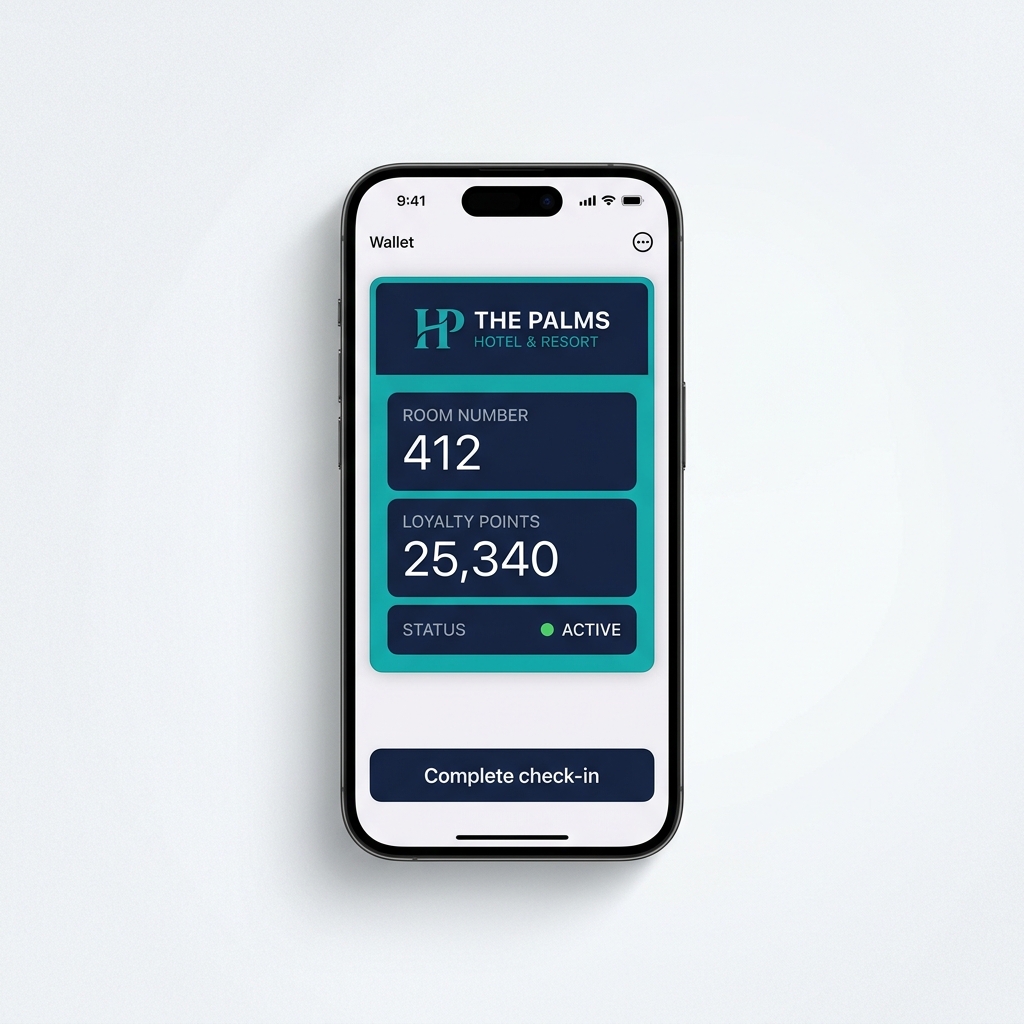
To understand the roadmap, we must map every function a hotel might want to deliver through a single digital pass. The key insight is that nine out of ten functions are available to independent hotels today, without hardware investment. The one exception — physical room door access via NFC — requires lock hardware. Everything else (check-in information, room number delivery, push notifications, loyalty display, upsells, geo-triggers, post-stay conversion) is deliverable through a wallet pass on existing infrastructure.
The Room Key Function: What It Requires and Whether It Is Worth It
Digital room keys delivered via Apple Wallet or Google Wallet are the function that generates the most interest and the most confusion among hotel teams. The core question is always the same: do we need to replace all our door locks? **How digital room keys work in a wallet pass** Apple Wallet room keys and Google Wallet room keys use NFC (Near Field Communication) technology — the same radio protocol used for contactless payments. The guest holds their phone near the lock reader, the encrypted credential in their wallet is authenticated, and the door opens in under a second. Crucially, Apple Wallet room keys work even when the device is in airplane mode or battery-saver mode, which removes the primary concern about a guest being locked out due to a dead phone. The credential is issued by the hotel's PMS or key management system, tied to the guest's check-in date, room assignment, and checkout time. At checkout, the key deactivates automatically. There is no physical card to collect, demagnetise, or lose. **What hardware is required** NFC-based wallet room keys require lock hardware that supports the NFC standard. The main lock vendors currently certified for Apple Wallet and Google Wallet room keys include Assa Abloy, dormakaba, and SALTO — all of which offer retrofit options that replace the electronic reader unit without requiring full lock body replacement in most cases. Bluetooth Low Energy (BLE) locks are an alternative but deliver the key through a hotel app rather than natively through Apple or Google Wallet.
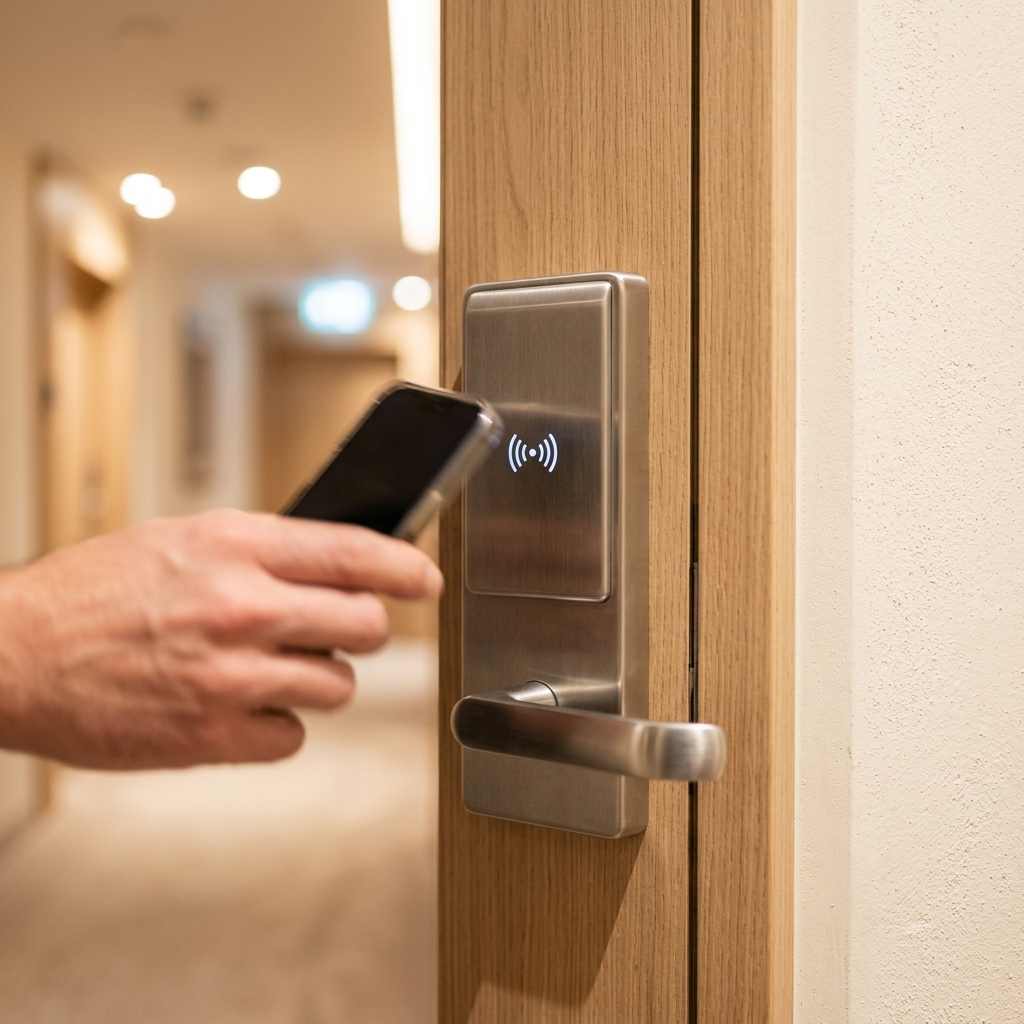
The honest answer on room keys: For hotels with modern NFC-compatible infrastructure or those undergoing a refurbishment where lock replacement is already planned, adding Apple Wallet and Google Wallet room key capability is a relatively incremental decision. For hotels with older magnetic stripe or RFID lock systems that are not NFC-compatible, the room key function requires a deliberate hardware investment. It is not a software-only decision.
Mobile Check-In via Wallet Pass: No Hardware Required
While the room key function requires hardware, mobile check-in — the ability for a guest to complete registration, provide ID, and confirm arrival details before reaching the property — is entirely achievable through a wallet pass without any infrastructure change. The mechanism is straightforward: the hotel's wallet pass includes a link on the pass back panel to a web-based check-in form. The guest taps the link, completes the pre-arrival registration (identity verification, payment confirmation, any upsell selections), and receives their room number via a pass update when their room is ready. The process is functionally identical to app-based mobile check-in — the guest arrives knowing their room number, bypasses the front desk queue, and uses the room key (physical or digital, depending on hardware) to enter. Hotels with web-based check-in systems (Canary, Apaleo, Mews, or a standalone check-in link) can connect these directly to their wallet pass without additional development. The pass becomes the delivery mechanism for the check-in link, the room number notification, and the check-in confirmation — covering the full pre-arrival function without a dedicated app.
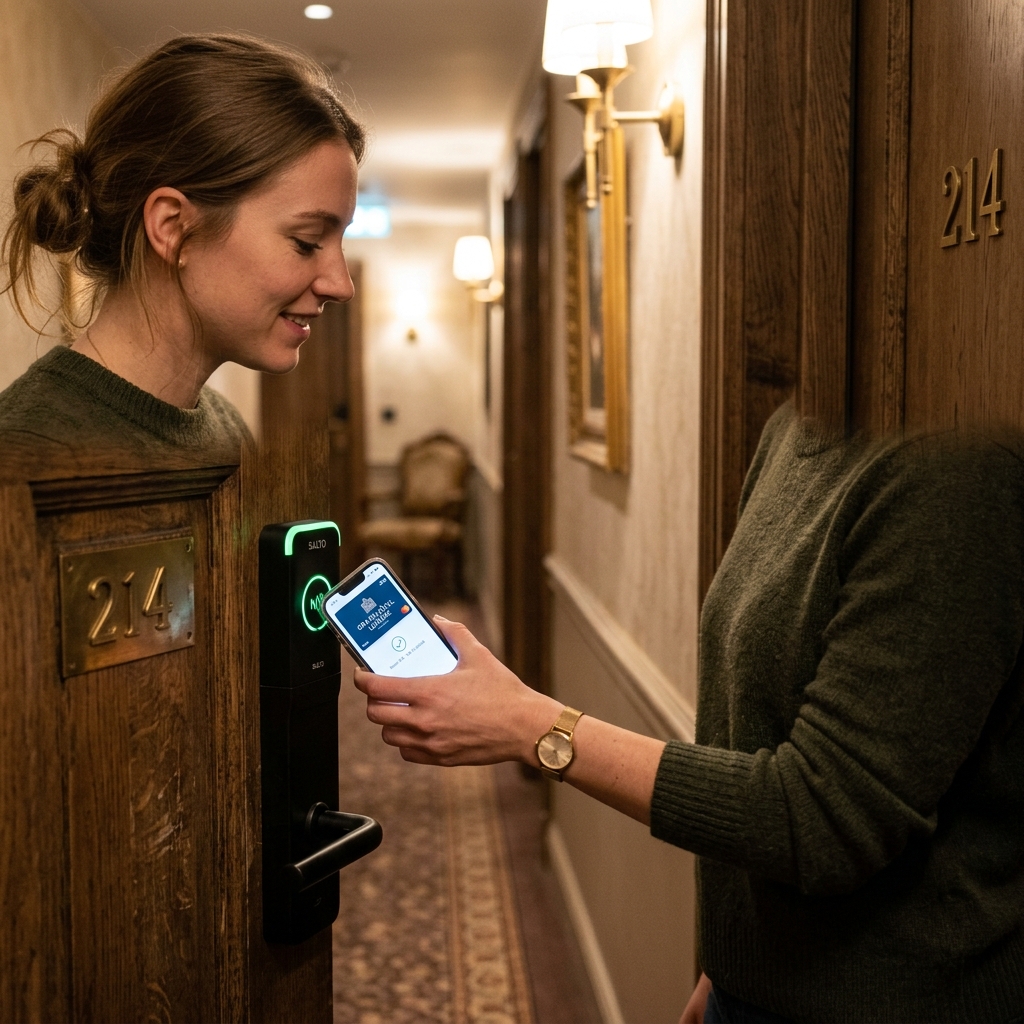
What this means in practice: A guest books a 4-star hotel in Bruges. At booking confirmation, they receive an email with an 'Add to Apple Wallet' button. They add the pass. 72 hours before arrival, the pass updates with a pre-arrival checklist and a 'Complete your check-in' link. They complete the web-based check-in from their sofa. On arrival day, the pass pushes a notification: 'Room 214 is ready. Lift to floor 2, second left.' They walk past the front desk and go directly to their room. No queue. No plastic card. No app download.
Loyalty in the Same Pass: How It Works
The loyalty function is the most commercially valuable component of the single-pass model — and the one that generates the strongest long-term ROI for independent hotels. Unlike mobile check-in (which primarily benefits the guest during a single stay) and the room key (which is a convenience feature), the loyalty pass creates a persistent, post-stay relationship between the hotel and the guest. **What loyalty looks like in a wallet pass** • Live points balance — pulled from the hotel's loyalty platform or PMS and displayed on the pass face. Updates automatically when points are added or redeemed. A field update notification fires on the guest's lock screen when the balance changes. • Tier or status display — the guest's loyalty tier (Silver, Gold, Member) is displayed as a badge or field on the pass, visible every time they open their wallet. • Return incentive delivery — at checkout, the pass converts from a 'stay' format to a 'loyalty' format, carrying a personalised return offer (a fixed discount, a room category upgrade, a complimentary experience). The offer is live on the pass face, persisting on the guest's device until it expires. • Re-engagement push notification — 7–10 days post-checkout, a push notification fires to the guest's lock screen: 'Your 15% return offer expires in 50 days.' The hotel stays visible in the guest's wallet — and consciousness — without competing against an email inbox. For independent hotels without a formal tiered loyalty programme, the pass can operate as a simpler 'membership' format: the guest is a 'tiketo Member' of the hotel, receives a points or visit counter, and earns a defined benefit after a number of stays. The mechanics are the same; the programme complexity is adjusted to what the hotel can maintain. **The loyalty-loyalty flywheel** The pass model creates a self-reinforcing engagement loop. The guest adds the pass at booking (for check-in information). During the stay, the pass delivers relevant communication (push notifications, geo-triggered offers). At checkout, the pass converts to a loyalty instrument. The return incentive drives a repeat booking. The repeat guest adds the same pass again at their next booking — with a higher points balance and a renewed reason to engage. Skift research found that guests who use mobile check-in return 40% more frequently than those who do not. A loyalty pass that extends the engagement channel beyond checkout compounds this effect: the guest has an ongoing reason to think about the hotel, a tangible benefit in their wallet, and a frictionless path back to booking.
The Incremental Adoption Path: Start Without Hardware, Add Room Key Later
For independent hotels that want to move toward a single-pass guest experience but are not yet ready for a full NFC hardware investment, the incremental path is clear and commercially sound: **Phase 1: Pass + check-in + loyalty (available today, no hardware)** Deploy a wallet pass via tiketo that delivers booking confirmation, web-based mobile check-in link, real-time room number notification, in-stay push notifications, and post-stay loyalty conversion. This covers nine of the ten functions in the capability matrix — everything except physical door access. Implementation timeline: four to six weeks. **Phase 2: Add room key capability (on hardware refresh or refurbishment)** When the hotel's lock infrastructure is due for refresh — typically on a 7–10 year replacement cycle — specify NFC-compatible locks (SALTO, Assa Abloy, dormakaba) that support Apple Wallet and Google Wallet native room keys. The digital guest presence is already established from Phase 1, making it easy to add a digital key alongside the guest's check-in and loyalty pass when the hardware is ready.
Why this path works for independent hotels: Phase 1 delivers the majority of the commercial value (higher satisfaction, stronger loyalty, direct rebooking uplift) at a fraction of the cost and complexity of a full NFC hardware programme. Phase 2 completes the vision when the hardware decision makes financial sense. Hotels do not need to wait for Phase 2 before starting to capture Phase 1 value.
Real-World Example: A Phased Approach at a 4-Star Hotel in Málaga
A 4-star hotel in Málaga with 78 rooms and a primarily European leisure guest base was operating with magnetic stripe room keys and a basic email-only communication programme. The hotel GM wanted to offer mobile check-in and a loyalty programme but had been quoted €35,000–€45,000 for a full NFC lock replacement, which was not in the current capital plan. The hotel deployed a tiketo wallet pass programme covering Phase 1 capabilities: booking confirmation pass, web-based mobile check-in link, room number delivery via push notification on arrival day, three in-stay notification slots used for a restaurant offer, a spa availability prompt, and a late-checkout upsell. At checkout, the pass converted to a loyalty format with a 12% return discount valid for 90 days. Within the first six months, pass adoption among smartphone-carrying guests reached 58%. The mobile check-in link was used by 41% of guests who added the pass, reducing front desk queue time at peak arrival windows by approximately 30%. The post-stay loyalty pass push notification (fired 10 days post-checkout) generated a direct rebooking conversion rate that outperformed any previous email-based return incentive the hotel had sent. The hotel plans to add NFC room key capability in a planned refurbishment scheduled for the following year — at which point they will roll out digital room keys via their lock vendor, sitting alongside their existing tiketo-powered check-in and loyalty passes.
Closing Insight
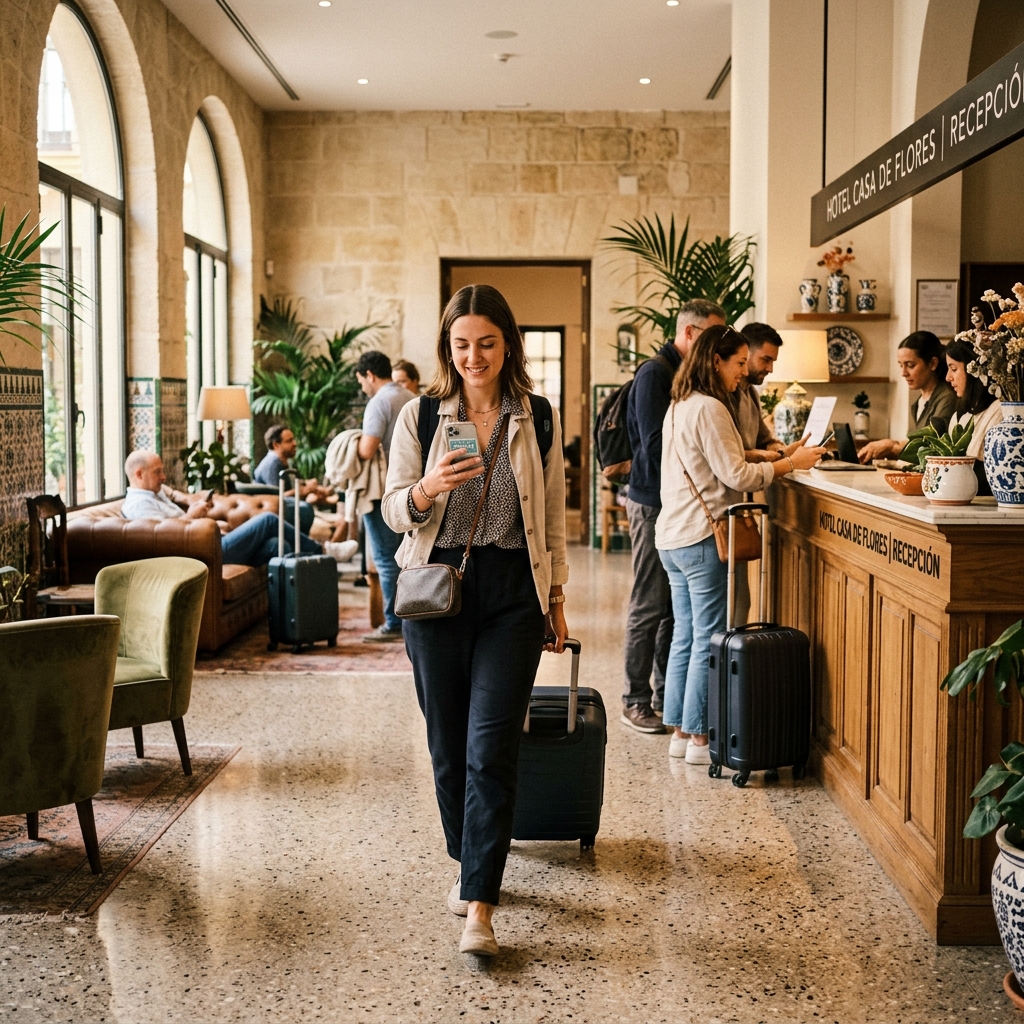
Mobile check-in, room key access, and loyalty in a single pass: yes, it is possible. Nine out of ten functions are available today, without hardware. The room key function requires NFC-compatible lock hardware — a real but addressable constraint that most hotels can plan for on their natural infrastructure replacement cycle. The commercially important insight is that hotels should not wait for the hardware to be ready before deploying the pass. The check-in and loyalty functions deliver measurable value on day one — higher guest satisfaction, stronger direct rebooking rates, and a persistent post-stay engagement channel. The room key capability completes the picture when the hardware investment is made. Ready to start with the pass capabilities that don't require hardware? tiketo deploys mobile check-in, in-stay engagement, and loyalty conversion through Apple Wallet and Google Wallet passes for independent hotels across Spain and Benelux — laying the digital foundation for your guest journey today.
Frequently Asked Questions
Q: Can a hotel digital pass replace a physical room key?
A: Yes — but only if the hotel has NFC-compatible door lock hardware. Apple Wallet and Google Wallet both support native hotel room keys via NFC technology, which works like contactless payment: the guest taps their phone to the lock reader and the door opens. Hotels with BLE (Bluetooth Low Energy) locks can also deliver room keys via a wallet pass, though BLE keys are typically app-delivered rather than natively wallet-based. Hotels with older magnetic stripe or standard RFID locks cannot deliver room keys via wallet passes without a hardware upgrade.
Q: Can mobile check-in and loyalty work in one pass without replacing the door locks?
A: Yes. Mobile check-in (web-based pre-arrival registration, room number delivery, arrival information) and loyalty (points display, tier status, return incentive, post-stay push notifications) are both fully achievable through a digital wallet pass without any door lock hardware. The room door function is the only component that requires NFC-compatible hardware. Hotels can deploy a full check-in and loyalty pass programme today and add the room key function later when hardware permits.
Q: How does mobile check-in work through a wallet pass?
A: The hotel's wallet pass includes a link to a web-based check-in form on the pass back panel. The guest taps the link — from their booking confirmation email, from a pre-arrival push notification, or directly from the pass in their wallet — and completes registration (ID verification, payment confirmation, room preferences). When their room is ready, the pass updates with the room number and a push notification alerts the guest. This flow integrates with most hotel web check-in systems (Canary, Mews, Apaleo, and others) without requiring additional development.
Q: What loyalty features can a digital wallet pass deliver?
A: A digital wallet pass can display a live loyalty points balance (updated automatically when points change, with a push notification on balance update), tier or membership status, personalised return incentive offers at checkout, and re-engagement push notifications post-stay. For hotels without a formal loyalty programme, the pass can operate as a simpler membership card — tracking visits, displaying a guest number, and delivering a defined benefit after a set number of stays. The pass is the delivery and display mechanism; the loyalty logic connects to whatever platform or PMS the hotel uses.
Q: What door lock brands are compatible with Apple Wallet and Google Wallet room keys?
A: The main lock vendors currently certified for Apple Wallet and Google Wallet native room keys include Assa Abloy, dormakaba, and SALTO. Most offer retrofit options — replacing the electronic reader unit without requiring full lock body replacement — which reduces the hardware investment for properties with existing compatible door bodies. Implementation timelines for a full hotel key installation typically run 30–90 days. Hotels should verify compatibility with their specific existing lock model before committing to a hardware specification.
More from the tiketo Blog
How to Build a Hotel Loyalty Program Without a Big Tech Budget
Independent hotels don't need enterprise software to run a loyalty programme. Here's a practical, right-sized framework — built on a wallet pass.
How Mobile Wallet Passes Increase Direct Bookings for Hotels
OTAs take 15–30% per booking. Here's how mobile wallet passes shift guests to direct — and keep them there. A practical guide for independent hotels.
Google Wallet Hotel Passes: The Complete Hospitality Guide
Everything hotel teams need to know about Google Wallet passes — pass types, push notifications, geo-triggers & real results. Powered by tiketo.
Apple Wallet for Hotels: How to Engage Guests Without an App
Apple Wallet is on every iPhone. Yet most hotels use it for one thing: a room door key. The pass — Apple's most powerful hospitality capability — is going almost entirely unused. Here's the full picture.
Push Notifications vs. Email: Which Works Better for Hotel Guest Communication?
If you manage guest communications at a hotel, there is a good chance you are making channel decisions based on email open rate data that is significantly inflated.
How to Personalise the Hotel Guest Experience at Scale
71% of hotel brands say personalisation is a priority, but only 15% believe they are doing it effectively. Discover a practical framework for bridging the execution gap without a full CRM overhaul.
5 Hospitality Trends Redefining the Guest Experience in 2026
From AI-powered bookings to digital wallet loyalty, discover the 5 data-backed trends redefining the guest experience in 2026 — and what they mean for your property.
How La Bottega Turns Guests Into Regulars.
Like many successful restaurants, La Bottega faced a familiar challenge: guests loved the experience, but paper loyalty cards weren't enough.
What Is a Digital Guest Journey and How to Map It for Your Hotel
Most hotels can describe what happens at check-in. Far fewer can describe what happens in the twelve touchpoints before a guest arrives, or the eight that follow after checkout. That gap is exactly what a digital guest journey map is designed to close.
Why Guests Don't Download Hotel Apps — And What to Do Instead
Over 70% of guests drop off before completing hotel app registration. Here's why — and the no-download alternatives that actually work.
Loyalty Programs for Boutique Hotels: What Actually Works
Most boutique hotels copy chain loyalty mechanics and wonder why it fails. Here's what actually works — and why your advantage is emotional, not transactional.
The Friction of Prestige: Why Elite Golf Resorts Are Replacing Plastic Cards with Native Device Infrastructure
Traditional golf operators equate plastic cards with prestige. Discover why top-tier clubs are transitioning to native smartphone wallets to capture lost secondary revenue.