Loyalty Programs for Boutique Hotels: What Actually Works
Most boutique hotels copy chain loyalty mechanics and wonder why it fails. Here's what actually works — and why your advantage is emotional, not transactional.
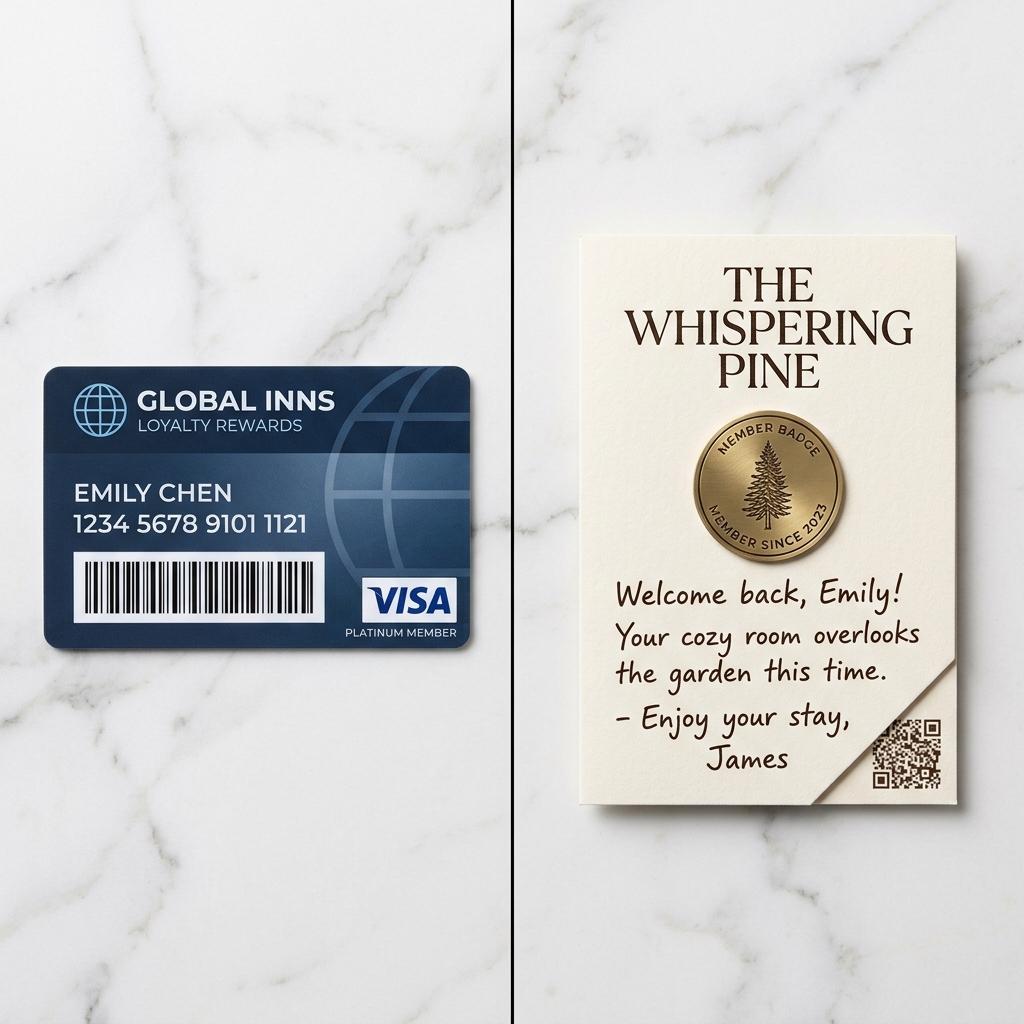
Most boutique hotels that attempt a loyalty programme make the same mistake: they build a miniature version of what Marriott Bonvoy or Hilton Honors does and expect similar results. Points per night, redemption thresholds, a tiered status ladder, a branded app. The mechanics are copied from chain programmes. The outcomes are consistently disappointing — not because loyalty doesn't work for boutique hotels, but because the wrong loyalty model is being applied. The irony is that boutique hotels have a structural loyalty advantage that chains spend billions trying to replicate. A guest who chooses a 40-room hotel in Ghent over a Marriott Courtyard three streets away is not making a transactional decision — they are making an emotional one. They want the personality of the place, the warmth of the people, the sense of being somewhere specific rather than somewhere generic. That emotional investment is the raw material of genuine loyalty. A points programme that ignores it and competes on transaction mechanics is discarding the most powerful tool a boutique hotel has. This post identifies what actually works in boutique hotel loyalty — and is honest about what reliably doesn't.
The Boutique Hotel Loyalty Advantage: Why You Have More to Work With Than You Think
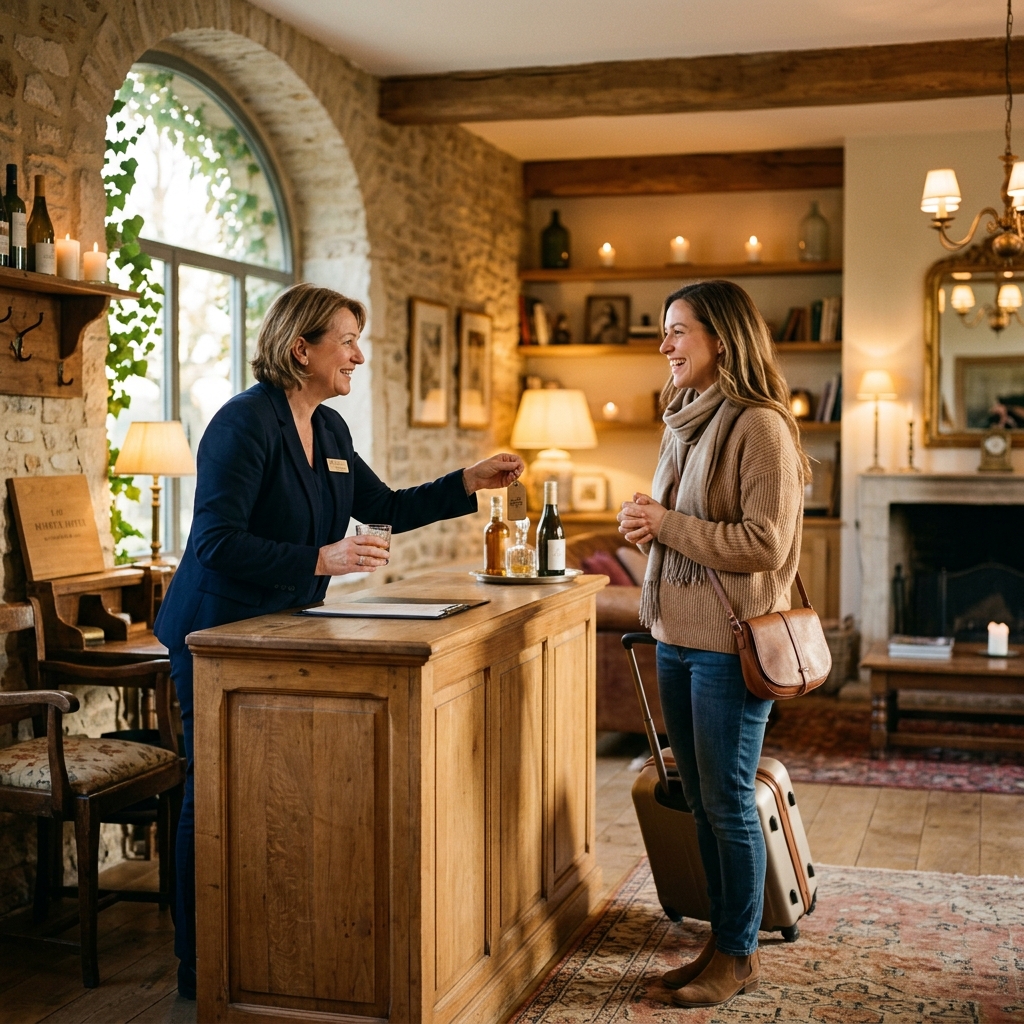
Chains build loyalty programmes to compensate for a deficit: their properties are consistent but interchangeable, their staff interactions scripted, their design predictable. Loyalty points are the mechanism by which chains make consistency feel like a relationship. 'You're a Gold member, Mr. Chen' is the chain version of being known. Boutique hotels do not have this deficit. A returning guest at a 35-room family-run property in San Sebastián is greeted by the same staff member who recommended a restaurant on their last visit. Their room preference is remembered. The owner recognises their face. This is genuine recognition — not a points calculation — and it produces a loyalty response that no tier status can replicate. Revinate's analysis of loyalty strategy for independent hotels identified a critical distinction that most boutique property managers intuitively understand but rarely articulate as strategy: the difference between transactional loyalty (I keep coming back because the points accumulation makes financial sense) and emotional loyalty (I keep coming back because I feel known, valued, and connected to this specific place). For boutique hotels, emotional loyalty is both more achievable and more commercially durable than transactional loyalty. It costs less to maintain, it generates stronger word-of-mouth advocacy, and it is far harder for a competitor to replicate. The challenge is designing a programme that formalises, scales, and extends this emotional connection — rather than replacing it with a points system the hotel can never win at.
The benchmark to know: Revinate's loyalty data establishes that well-performing hotel loyalty programmes drive 40–50% of occupied room nights from loyalty members. For boutique hotels starting from zero, a realistic 12-month target is 20–25% of direct bookings from active pass or membership holders. That alone justifies the programme investment — before accounting for the ancillary spend uplift and review volume improvement that loyal guests consistently deliver.
What Doesn't Work: The Four Boutique Hotel Loyalty Mistakes
**Mistake 1: Building a points programme you can't compete in** When a boutique hotel guest earns 10 points per euro at your property and compares that to the Marriott Bonvoy earn rate at a property two streets away — with global redemption options, airline transfer partners, and 8,000 properties to use the points at — the comparison is brutal. You cannot win a transactional points war against a programme with 228 million members. Attempting to do so trains your most points-conscious guests to feel undervalued, not loyal. This does not mean points have no role in boutique hotel loyalty. It means points should be the mechanism, not the message. The points accumulate towards an experience or recognition that only your specific property can offer — making the comparison to Bonvoy irrelevant. **Mistake 2: Generic percentage discounts as the loyalty benefit** A 10% return discount is easy to implement, easy to communicate, and reliably ineffective as a loyalty-building mechanism. It tells the guest that the relationship is transactional and price-based. It trains them to wait for a discount before booking rather than feeling the pull of genuine loyalty. It also competes directly with OTA promotional pricing, which will frequently offer a better discount to the same guest through a different channel. The 58.7% of travellers who currently do not participate in any hotel loyalty programme are not staying away because the discount isn't large enough. They are staying away because no programme has made them feel that membership offers something meaningfully different from a booking without it. **Mistake 3: Requiring app download for loyalty access** As established in detail in Post #7 of the Mobile Wallet & Tech series, over 70% of guests drop off at the mandatory registration step when asked to download a hotel app. For a boutique hotel with limited marketing resource, building a loyalty programme whose participation mechanism is a low-adoption app is building a loyalty programme that most guests will never join. **Mistake 4: No post-stay engagement mechanism** Most boutique hotels with any form of loyalty programme run it as an in-stay benefit: a welcome drink for returning guests, a room preference note, a discount card given at checkout. These are valuable gestures. What they lack is a mechanism that keeps the hotel present on the guest's device after they leave — between stays, when the rebooking decision is forming. A programme with no post-stay re-engagement trigger is a programme that relies entirely on the guest remembering to return of their own accord.
What Actually Works: Four Loyalty Approaches That Play to Boutique Hotel Strengths
**1. Recognition-led loyalty: the zero-cost highest-impact mechanism** The single most effective loyalty mechanism for boutique hotels has no technology requirement and no marginal cost. When a returning guest is greeted by name, told that their preference for a quiet room has been remembered, and receives a personal note from the owner or manager — the emotional impact exceeds anything a points balance can deliver. Marriott's own research found that members who redeemed points for exclusive experiences had a 25% higher retention rate than those who only redeemed for room nights. The experience of being recognised and valued is the hotel equivalent of that experiential redemption — and boutique hotels can deliver it on every single stay. The challenge is consistency at scale. Recognition-led loyalty works when it is systematically captured (preferences recorded in the PMS after every stay, available to the team before every return visit) and systematically delivered (a morning briefing that flags returning guests and their noted preferences). Without the system, recognition happens by accident. With it, it becomes the programme. **2. Experience-based rewards that only your property can offer** The reward in a boutique hotel loyalty programme should be something that cannot be redeemed anywhere else. A complimentary dinner at the hotel's restaurant, a guided walk of the neighbourhood with the owner, access to a local market before it opens to the public, a private tasting with the chef, a room in the historic wing that isn't available to non-members. These are rewards that make the membership feel exclusive to a relationship with a specific place — not a points currency that could be spent anywhere. This approach requires no points engine. The hotel defines a reward (one experience per programme tier per stay, or a defined milestone reward after a number of visits) and delivers it manually. The guest communicates to friends not that they are a loyalty member — but that their hotel gave them access to something they couldn't have arranged themselves. That is the best possible loyalty programme marketing, and it costs the hotel a fraction of a generic discount.
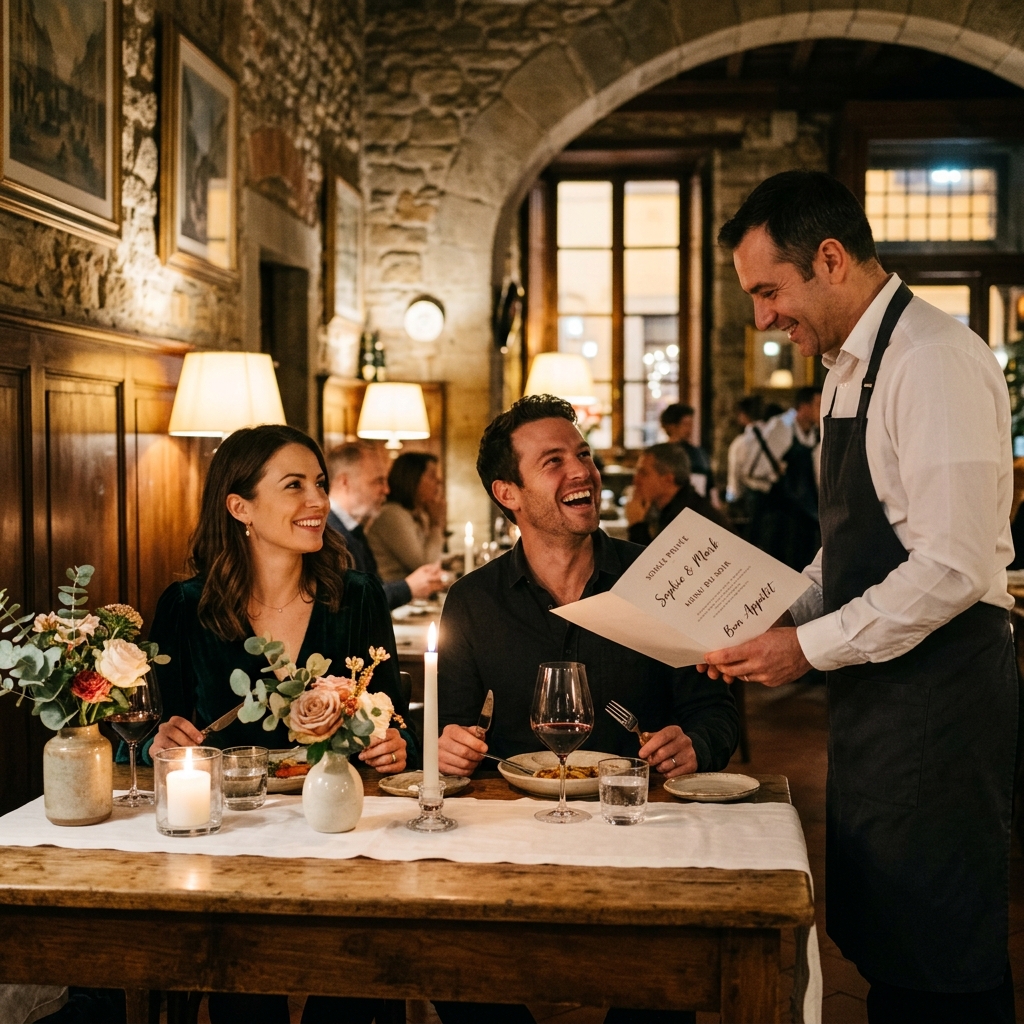
**3. Community membership as the loyalty identity** Some of the most commercially effective boutique hotel loyalty programmes are framed not as reward schemes but as membership communities. The guest is not collecting points — they are a member of something. The Hoxton's Dis-Loyalty programme is structured around lifestyle identity rather than transaction mechanics: members get 20% off their first stay, 10% off every return visit, and 10% off food and drinks at affiliated venues — but the programme's appeal is that it positions members as part of a design-and-food-literate community, not as points accumulators. For an independent boutique hotel in Amsterdam or Valencia, a lightweight community membership — a named 'inner circle', a seasonal newsletter with genuine local content, early access to new F&B menu launches, an invitation to a once-a-year private event — creates a loyalty identity that is emotionally resonant and operationally lightweight. The wallet pass carries the membership credential and delivers the community touchpoints. **4. Wallet pass + post-stay push: the infrastructure layer for all of the above** Recognition, experience rewards, and community membership all work better when they have a persistent, push-capable delivery mechanism. A digital wallet pass carries the membership credential, displays the guest's current status and any active reward, and fires a push notification at the moment most likely to drive a return booking: 7–10 days after checkout, when the stay is still vivid and the guest is back in their normal environment. Critically, the push notification does not have to be a discount prompt. It can be a personalised message — 'The autumn menu launches next month. Your table is waitlisted.' or 'Your second stay unlocks the rooftop suite preference. We hope to see you back soon.' — that reinforces the community membership and the specific relationship with the hotel. This is the boutique loyalty programme that chains cannot replicate, delivered through a channel that requires no app and no registration barrier.
Cost perspective: CBRE's 2025 data puts the cost per occupied room for loyalty programmes at £5.46 on average — 1.6% of total revenue. For a boutique hotel combining recognition-led loyalty (near-zero marginal cost), experience-based rewards (operationally low-cost), and a wallet pass programme (platform subscription + notification costs), the total programme cost comfortably sits at or below this benchmark — while delivering the emotional differentiation that transactional points programmes cannot.
Real-World Example: A Community Membership Programme at a Boutique Hotel in Amsterdam
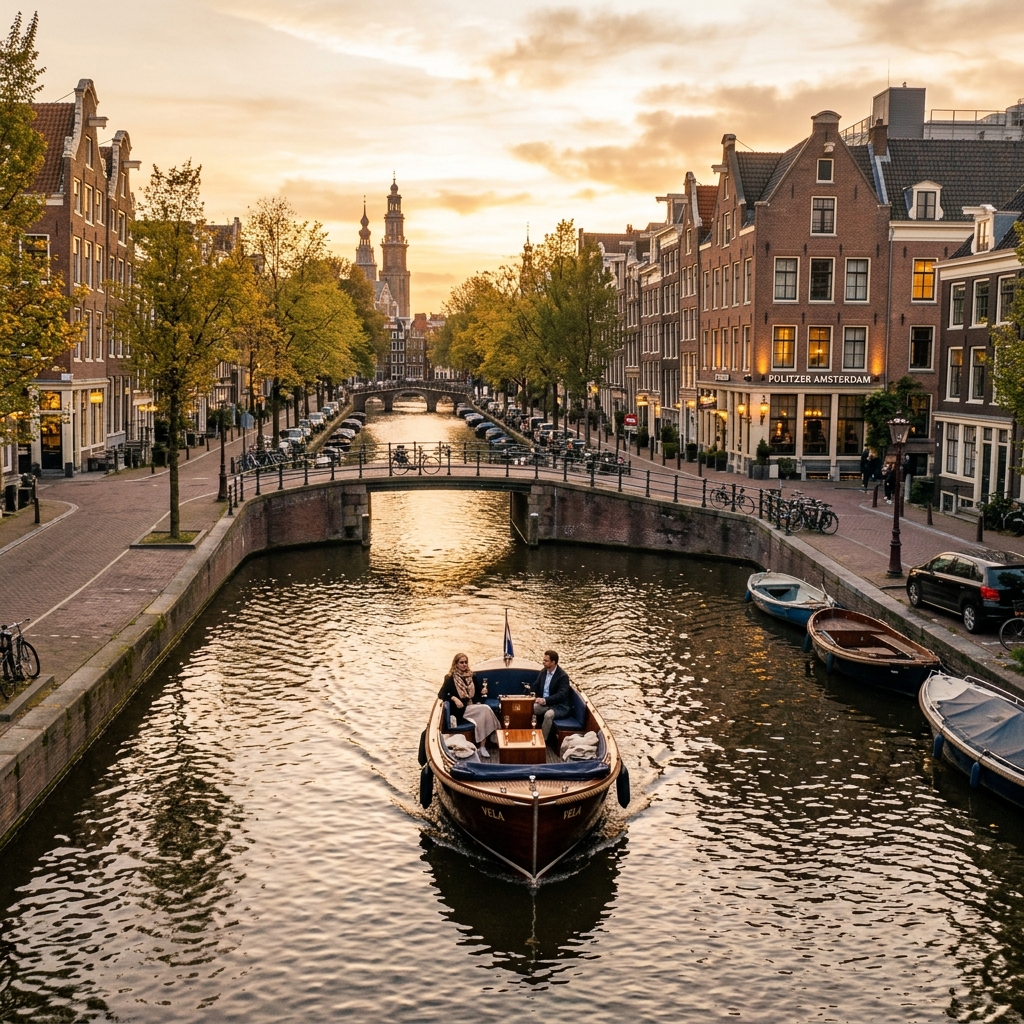
A 28-room boutique hotel in Amsterdam's canal district had a strong product and excellent review scores, but no structured loyalty programme. Their repeat-guest rate was 22%. They were losing returning guests to Booking.com because their post-stay communication consisted of a single review request email. The GM defined three principles for their programme: it should feel like membership of a place, not collection of points; the reward should be something guests cannot arrange themselves; and the post-stay touchpoint should feel personal, not automated. They launched a 'Canal Member' programme via tiketo with the following design. Guests who book direct receive a branded wallet pass at confirmation with a 'Canal Member' badge. On their second direct stay, they receive a complimentary private canal boat tour for two, arranged by the hotel with a local operator — not redeemable elsewhere, not purchasable at the same price independently. Members receive a quarterly 'from the hotel' push notification via the pass — a genuine local recommendation, a seasonal event, a new restaurant the team loves — with a soft booking prompt embedded. Within 12 months, the hotel's direct rebooking rate from pass holders was 2.8 times higher than from non-holders. Pass adoption among direct bookers reached 61%. The canal boat experience generated the highest volume of unprompted social media posts of any guest touchpoint in the hotel's history — each one referencing the hotel by name and the membership by identity. The programme generated direct ROI from the direct booking uplift alone; the word-of-mouth acquisition effect was an unmeasured secondary benefit.
Closing Insight
Boutique hotel loyalty works when it is honest about what boutique hotels are. You are not Marriott Bonvoy. You do not need to be. Your loyalty advantage is emotional, personal, and place-specific — the opposite of what a transactional points programme delivers. The hotels in this segment seeing the strongest loyalty returns are those that have stopped copying chain mechanics and started building programmes around the specific reasons their guests chose them in the first place. A wallet pass programme delivers the infrastructure: frictionless membership, persistent device presence, post-stay push notifications, and the flexibility to carry whatever reward and community identity fits your property. The programme design — what makes it feel distinctively yours — is the creative work that only you can do. Ready to build a loyalty programme that actually feels like your hotel? tiketo designs and manages wallet-pass-based membership and loyalty programmes for boutique hotels across Spain and Benelux — from branded pass design to experience reward delivery and post-stay re-engagement.
Frequently Asked Questions
Q: Do loyalty programmes work for boutique hotels?
A: Yes — but only when the programme is designed to play to boutique hotel strengths rather than mimic chain mechanics. A programme that formalises and extends this emotional connection — through recognition, experience-based rewards, and community identity — consistently outperforms generic points-per-night programmes for independent properties.
Q: What loyalty rewards work best for boutique hotels?
A: The most effective rewards for boutique hotels are those that only that specific property can offer: a private experience curated by the hotel team, access to something local that the hotel has arranged, a recognition-based benefit, or an invitation to an exclusive event tied to the hotel's identity.
Q: Should boutique hotels join a loyalty network like Stash or The Guestbook?
A: Third-party loyalty networks offer scale, but the guest relationship lives inside the network rather than the hotel. For boutique hotels with a strong specific identity and genuine repeat-guest potential, a proprietary programme (delivered through a wallet pass) typically generates stronger direct booking ROI because the hotel owns the communication channel and the rebooking trigger.
Q: How do I make my boutique hotel loyalty programme feel different from a chain?
A: The key is designing around your boutique hotel's specific identity, not around generic loyalty mechanics. Your programme name should reflect the property's character. Your rewards should only be available at your property. Your communication should feel personal and locally grounded. The membership should feel like access to something, not accumulation of currency.
Q: How does a digital wallet pass support boutique hotel loyalty?
A: A digital wallet pass is the delivery mechanism that makes a boutique hotel loyalty programme operationally viable without enterprise infrastructure. The pass carries the membership credential, displays the guest's current reward status, and enables push notifications to the lock screen. No app download required.
More from the tiketo Blog
How to Build a Hotel Loyalty Program Without a Big Tech Budget
Independent hotels don't need enterprise software to run a loyalty programme. Here's a practical, right-sized framework — built on a wallet pass.
How Mobile Wallet Passes Increase Direct Bookings for Hotels
OTAs take 15–30% per booking. Here's how mobile wallet passes shift guests to direct — and keep them there. A practical guide for independent hotels.
Mobile Check-In, Room Keys & Loyalty in One Pass: Is It Possible?
Can one digital hotel pass handle check-in, room key access and loyalty? Here's the honest answer — what's possible today, what needs hardware, and how to start.
Google Wallet Hotel Passes: The Complete Hospitality Guide
Everything hotel teams need to know about Google Wallet passes — pass types, push notifications, geo-triggers & real results. Powered by tiketo.
Apple Wallet for Hotels: How to Engage Guests Without an App
Apple Wallet is on every iPhone. Yet most hotels use it for one thing: a room door key. The pass — Apple's most powerful hospitality capability — is going almost entirely unused. Here's the full picture.
Push Notifications vs. Email: Which Works Better for Hotel Guest Communication?
If you manage guest communications at a hotel, there is a good chance you are making channel decisions based on email open rate data that is significantly inflated.
How to Personalise the Hotel Guest Experience at Scale
71% of hotel brands say personalisation is a priority, but only 15% believe they are doing it effectively. Discover a practical framework for bridging the execution gap without a full CRM overhaul.
5 Hospitality Trends Redefining the Guest Experience in 2026
From AI-powered bookings to digital wallet loyalty, discover the 5 data-backed trends redefining the guest experience in 2026 — and what they mean for your property.
How La Bottega Turns Guests Into Regulars.
Like many successful restaurants, La Bottega faced a familiar challenge: guests loved the experience, but paper loyalty cards weren't enough.
What Is a Digital Guest Journey and How to Map It for Your Hotel
Most hotels can describe what happens at check-in. Far fewer can describe what happens in the twelve touchpoints before a guest arrives, or the eight that follow after checkout. That gap is exactly what a digital guest journey map is designed to close.
Why Guests Don't Download Hotel Apps — And What to Do Instead
Over 70% of guests drop off before completing hotel app registration. Here's why — and the no-download alternatives that actually work.
The Friction of Prestige: Why Elite Golf Resorts Are Replacing Plastic Cards with Native Device Infrastructure
Traditional golf operators equate plastic cards with prestige. Discover why top-tier clubs are transitioning to native smartphone wallets to capture lost secondary revenue.