How to Personalise the Hotel Guest Experience at Scale
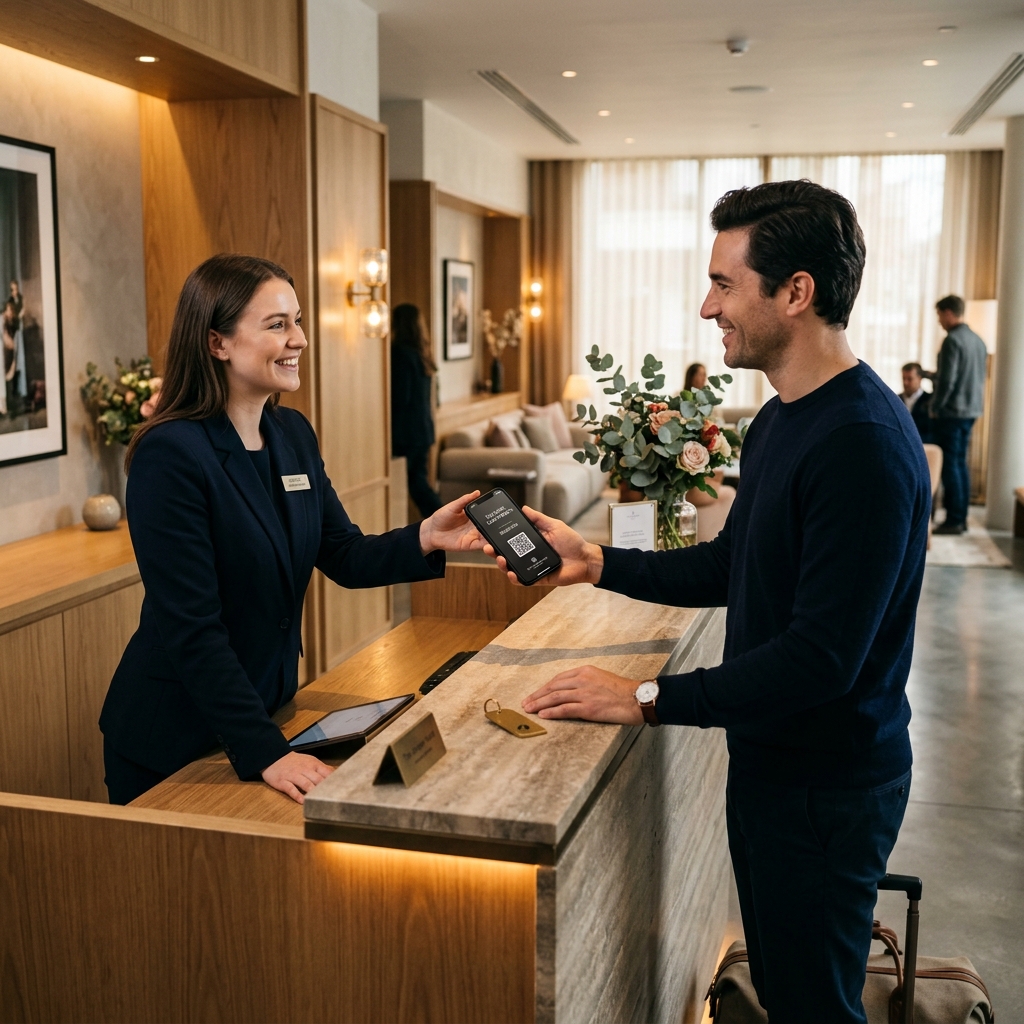
71% of hotel brands say personalisation is a priority, but only 15% believe they are doing it effectively. Discover a practical framework for bridging the execution gap without a full CRM overhaul.
Here is a number worth sitting with: 71% of hotel brands say personalisation is a priority, but only 15% believe they are doing it effectively. That is not a technology gap — it is an execution gap. The hotels aspiring to personalise and the hotels actually delivering it are not separated by a larger budget or a better CRM. They are separated by a clearer understanding of what personalisation actually requires at the operational level. For most independent and boutique hotels in Europe, personalisation has become synonymous with complexity. The assumption is that meaningful, individualised guest experiences require enterprise software, dedicated data teams, and a complete overhaul of existing systems. That assumption is wrong — and it is keeping a large number of well-run properties from capturing real revenue.
Why Personalisation Has Moved from Competitive Advantage to Baseline Expectation
Personalisation in hospitality used to be the hallmark of luxury brands — the Ritz remembering your preferred pillow, the Four Seasons having your usual drink ready at the bar. Today, it is a baseline expectation across all hotel segments, driven partly by the ubiquity of personalised digital experiences in every other part of guests' lives. Guests arrive having spent the week receiving personalised product recommendations from Amazon, curated playlists from Spotify, and tailored news from their social feeds. The contrast with a generic 'Dear Guest' pre-arrival email is jarring — not because the guest consciously notices it, but because generic communication feels like a signal that the hotel doesn't know them and hasn't tried to.
The commercial case is substantial: PwC research found that 65% of guests consider personalisation central to their experience and will pay up to 25% more for a stay that delivers it. McKinsey's data puts the revenue and retention ROI of effective personalisation at 10–30%.
What Data You Actually Need — and Where to Get It
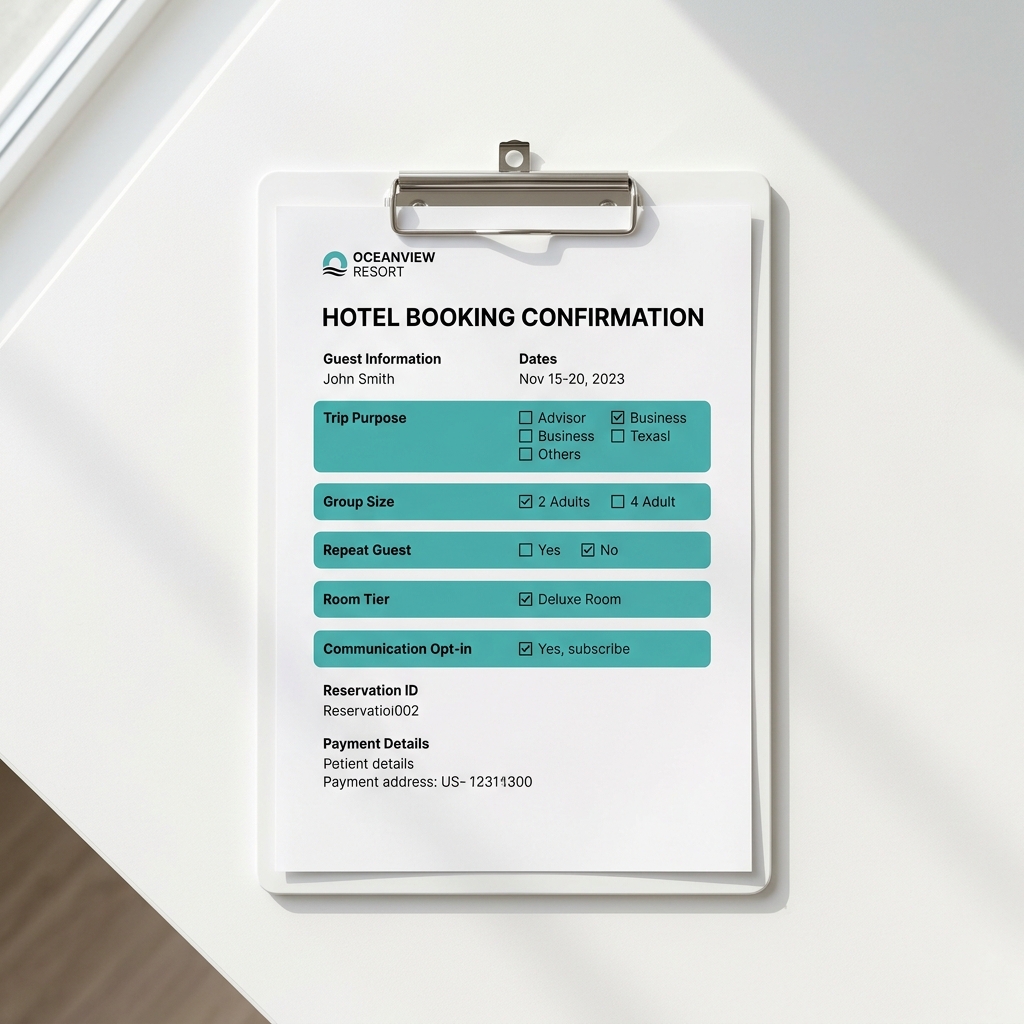
The most common reason hotels fail at personalisation is believing they need more data than they do before they can start. In practice, meaningful personalisation at the 3–5 star independent level requires five data points: • Trip purpose — business, leisure, anniversary, family, solo. • Group composition — travelling alone, as a couple, with children. • Repeat guest status — first visit or returning. • Room type and rate tier — premium vs. budget. • Communication opt-in preference — GDPR compliance and engagement signal.
A Three-Layer Personalisation Framework Any Hotel Can Implement
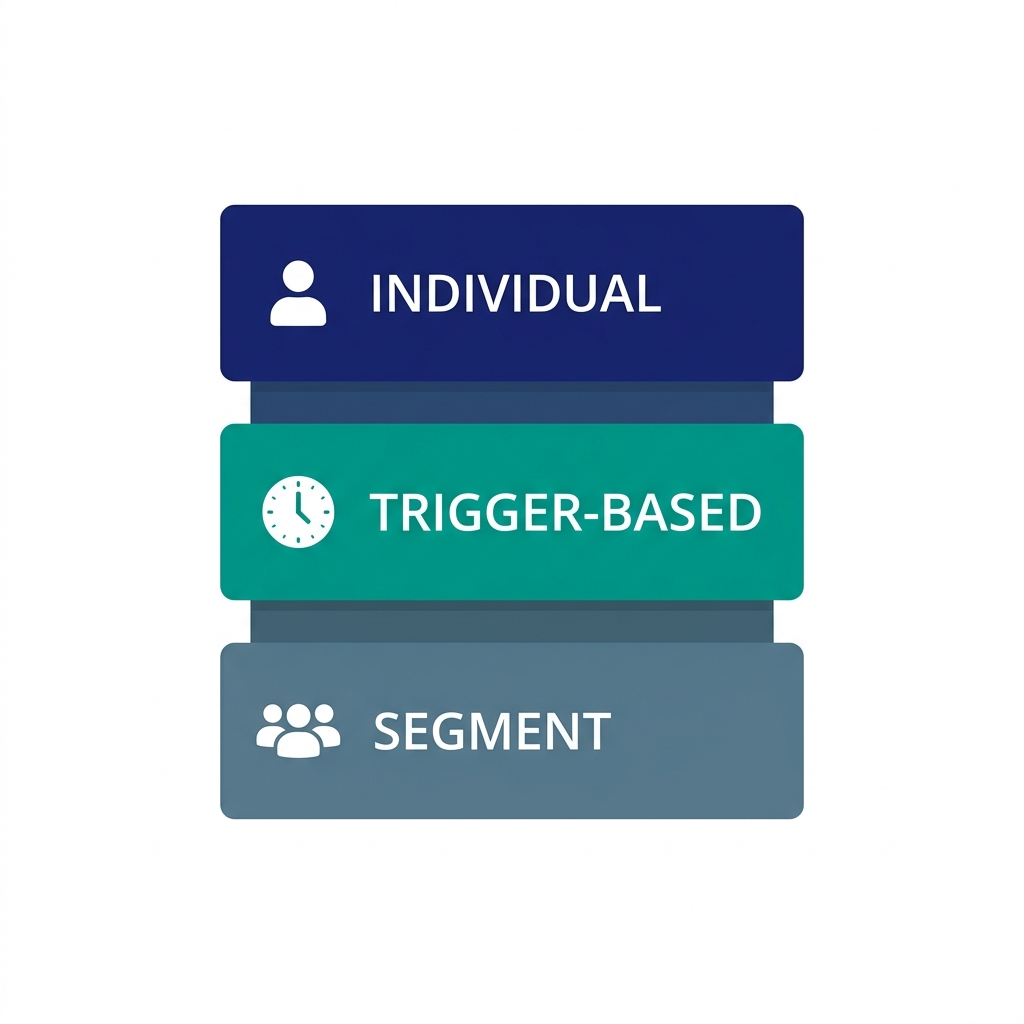
**Layer 1: Segment-level personalisation (immediate, no new tech)** Segment your existing guest database into four to six meaningful groups: business traveller, leisure couple, family, solo explorer, repeat loyalty guest, event or group guest. Create distinct communication templates for each segment. Revinate's 2024 benchmark data shows that emails with three or more segment filters generate 2.6 times more revenue per recipient than unsegmented sends. **Layer 2: Trigger-based personalisation (moderate effort, high ROI)** Trigger-based personalisation sends the right message at the right moment based on a specific event: booking confirmation, 72 hours pre-arrival, day of check-in, mid-stay, checkout, and 7–10 days post-stay. This approach removes the human decision-making overhead from day-to-day guest communication. **Layer 3: Individual-level personalisation (requires data history, highest value)** Individual-level personalisation uses known guest history — previous room preferences, dietary requirements, special occasion records — to create communications that feel genuinely bespoke. For returning guests, being addressed by name and acknowledged for a previous stay is the single most impactful personalisation signal a hotel can send.
Choosing the Right Channel for Each Personalisation Layer
Data and segmentation are only half of the personalisation equation. The channel determines whether it is seen or ignored. • **Email — best for pre-arrival and post-stay:** Email remains high-reach, but is competing against a crowded inbox. Pre-arrival emails should be visually clean and segment-specific. • **Push notifications via digital wallet passes — best for in-stay and time-sensitive triggers:** Push notifications delivered through Apple Wallet and Google Wallet passes consistently outperform email for in-stay triggers because they arrive on the lock screen. The key advantage is persistence — the pass sits permanently on the guest's device, updated in real time.
Personalisation Without a CRM: A Practical Approach
The most common objection is the absence of a full CRM. This is a false constraint. The five core data points are available in almost every PMS or booking engine. **A minimum viable personalisation stack:** 1. A booking confirmation process that collects trip purpose and group composition. 2. A pre-arrival email template library with four to six segment variants. 3. A digital pass platform (tiketo) that handles pass generation and push notifications. 4. A post-stay email sequence with a segment-matched return incentive.
Case Study: 4-Star Boutique Hotel in Amsterdam
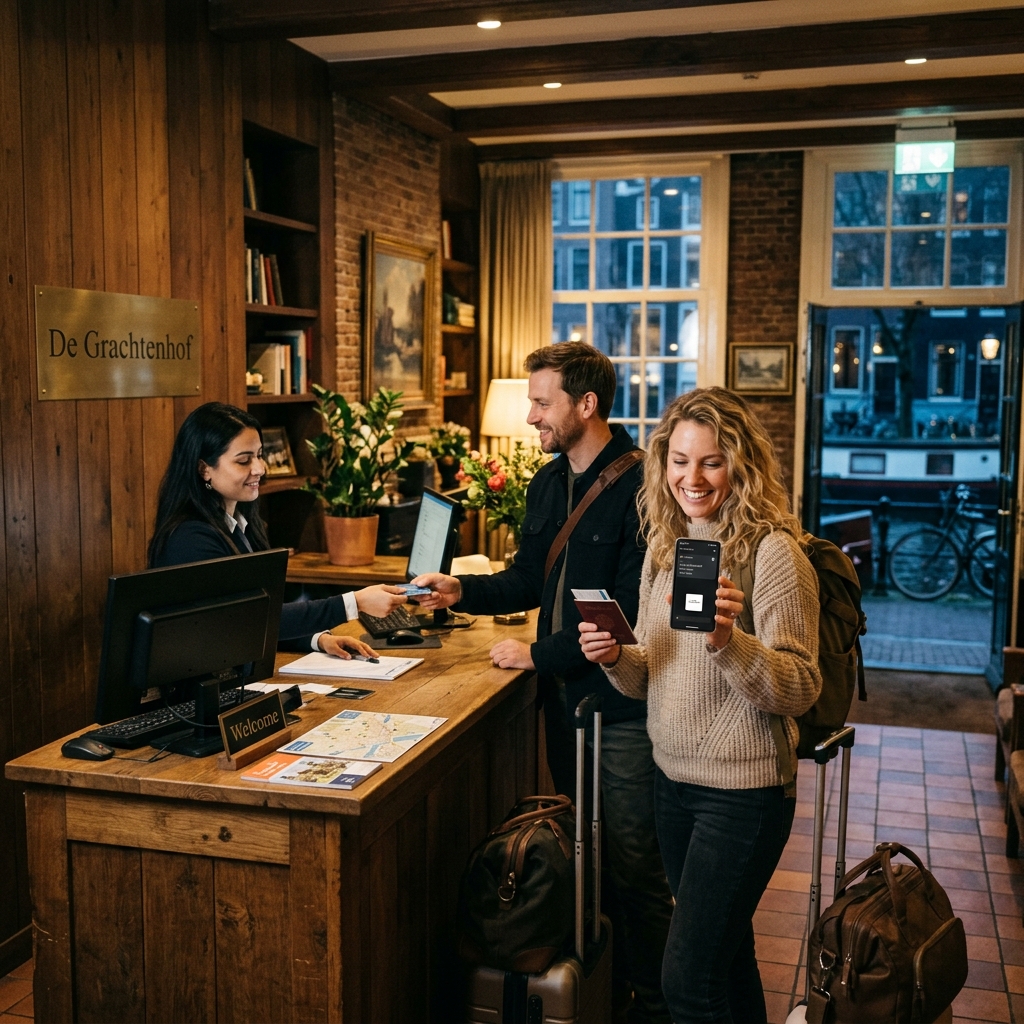
A 62-room hotel in Amsterdam increased direct rebooking rates and ancillary spend by mapping their guest database into three clear segments: leisure couples (34%), solo business travellers (22%), and special occasion guests (12%). By implementing segmented pre-arrival emails and tiketo digital passes that updated automatically with room numbers and segment-matched in-stay offers, they moved from generic interaction to high-value recognition.
Closing Insight
The gap between personalisation intent and execution is a process problem, not a technology problem. Start with segments, build trigger sequences, and extend to individual recognition as your data accumulates. Want to see personalisation in action without the CRM overhead? tiketo helps hotels across Spain and Benelux activate guest data through Apple Wallet and Google Wallet passes — personalised by segment, updated in real time, and delivered without app friction.
Frequently Asked Questions
Q: What does personalisation mean in a hotel context?
A: Adapting communication, offers, and services to reflect what is known about an individual guest — their trip purpose, preferences, and loyalty status.
Q: Do you need expensive software to personalise?
A: No. Meaningful personalisation begins with consistent data collection and an activation layer like tiketo digital passes.
Q: What is the commercial impact of personalisation?
A: Research points to a 10–30% improvement in revenue and retention ROI. Segmented emails can generate 2.6x more revenue per recipient.
More from the tiketo Blog
How to Build a Hotel Loyalty Program Without a Big Tech Budget
Independent hotels don't need enterprise software to run a loyalty programme. Here's a practical, right-sized framework — built on a wallet pass.
How Mobile Wallet Passes Increase Direct Bookings for Hotels
OTAs take 15–30% per booking. Here's how mobile wallet passes shift guests to direct — and keep them there. A practical guide for independent hotels.
Mobile Check-In, Room Keys & Loyalty in One Pass: Is It Possible?
Can one digital hotel pass handle check-in, room key access and loyalty? Here's the honest answer — what's possible today, what needs hardware, and how to start.
Google Wallet Hotel Passes: The Complete Hospitality Guide
Everything hotel teams need to know about Google Wallet passes — pass types, push notifications, geo-triggers & real results. Powered by tiketo.
Apple Wallet for Hotels: How to Engage Guests Without an App
Apple Wallet is on every iPhone. Yet most hotels use it for one thing: a room door key. The pass — Apple's most powerful hospitality capability — is going almost entirely unused. Here's the full picture.
Push Notifications vs. Email: Which Works Better for Hotel Guest Communication?
If you manage guest communications at a hotel, there is a good chance you are making channel decisions based on email open rate data that is significantly inflated.
5 Hospitality Trends Redefining the Guest Experience in 2026
From AI-powered bookings to digital wallet loyalty, discover the 5 data-backed trends redefining the guest experience in 2026 — and what they mean for your property.
How La Bottega Turns Guests Into Regulars.
Like many successful restaurants, La Bottega faced a familiar challenge: guests loved the experience, but paper loyalty cards weren't enough.
What Is a Digital Guest Journey and How to Map It for Your Hotel
Most hotels can describe what happens at check-in. Far fewer can describe what happens in the twelve touchpoints before a guest arrives, or the eight that follow after checkout. That gap is exactly what a digital guest journey map is designed to close.
Why Guests Don't Download Hotel Apps — And What to Do Instead
Over 70% of guests drop off before completing hotel app registration. Here's why — and the no-download alternatives that actually work.
Loyalty Programs for Boutique Hotels: What Actually Works
Most boutique hotels copy chain loyalty mechanics and wonder why it fails. Here's what actually works — and why your advantage is emotional, not transactional.
The Friction of Prestige: Why Elite Golf Resorts Are Replacing Plastic Cards with Native Device Infrastructure
Traditional golf operators equate plastic cards with prestige. Discover why top-tier clubs are transitioning to native smartphone wallets to capture lost secondary revenue.