The Friction of Prestige: Why Elite Golf Resorts Are Replacing Plastic Cards with Native Device Infrastructure
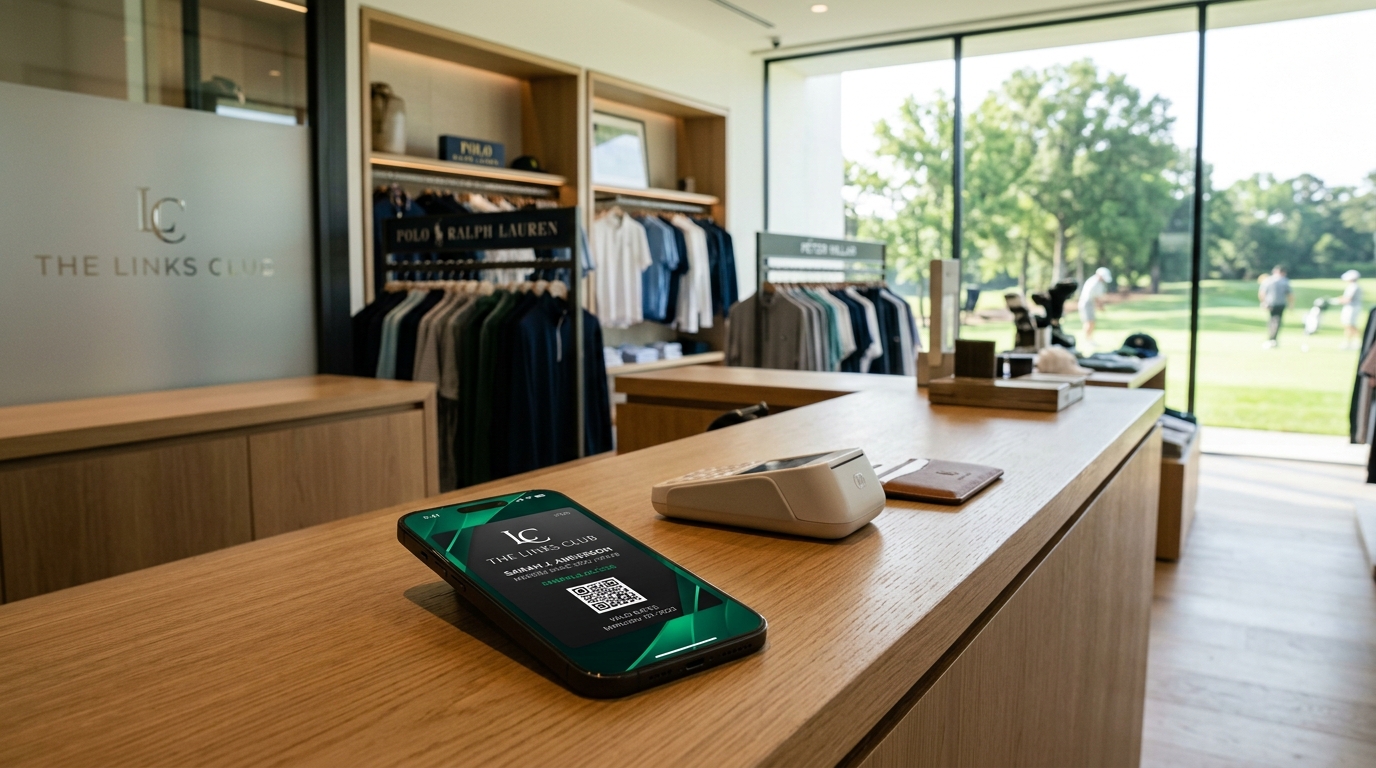
Traditional golf operators equate plastic cards with prestige. Discover why top-tier clubs are transitioning to native smartphone wallets to capture lost secondary revenue.
Private golf clubs and premium golf resorts pride themselves on the unscripted perfection of their guest experience. The valet arrival is seamless, the fairways are manicured to the millimeter, and the locker rooms maintain an aura of exclusive quiet luxury. Yet, the moment a member arrives at the bag drop or walks into the pro shop, this illusion of bespoke hospitality hits a rigid technological bottleneck. For decades, golf operators have treated physical assets—heavy plastic membership cards, engraved brass bag tags, and printed handicap certificates—as symbols of status. In reality, these objects have become friction points. They are routinely left in lockers, forgotten in alternative golf bags, or lost in the glove box of a secondary vehicle.
When a member must manually dictate their account number to a staff member at the 9th-hole halfway house just to charge a casual lunch, the premium experience breaks down. For mid-to-large golf operations, the future of membership management is not physical, nor is it found in forcing members to download a heavy, single-use club application. It lies in leveraging the infrastructure already sitting natively in their smartphones.
The True Balance Sheet Impact of Non-Dues Revenue
To evaluate the operational health of a premium golf property, management must look past annual membership dues and focus on secondary spend optimization. In premium golf operations, non-dues revenue—encompassing pro-shop retail, food and beverage (F&B), guest green fees, and academy instruction—accounts for up to 45% of a club’s gross operating profit. When transaction velocity slows down at the point of sale (POS), non-dues revenue leaks. If a member finds it tedious to verify their club account at the register, they pay with a standard personal or corporate credit card. This introduces a double financial loss: the club pays unnecessary merchant interchange fees, and management loses the granular behavioral data required to track member purchasing habits. Furthermore, member attrition is an exceptionally expensive operational failure. Attracting a new member to a private club costs up to seven times more than retaining an existing one. Retention is driven by timely utility and communication. When a club relies on bulk email blasts to announce sudden course closures or tournament updates, they are speaking to an empty room; modern executive email filters ensure these messages rarely see the light of day.
Technical Bottlenecks Holding Back Premium Clubs
Most independent golf properties suffer from four recurring operational vulnerabilities: **The Plastic Delusion:** Issuing physical membership cards provides a false sense of administrative control. When members lose or forget them, front-line staff spend valuable minutes looking up profiles manually, slowing down checkout lines and delaying tee times. **Club App Fatigue:** Many resorts invest heavily in custom, branded applications. Data reveals that modern consumers are systematically deleting single-use apps due to device storage constraints and notification clutter. If your loyalty or booking system requires a member to remember a unique password on a custom app every Saturday morning, adoption will stall. **The Communication Vacuum:** Weather delays, frost warnings, and aerification schedules change by the minute. Sending a legacy email blast regarding a 45-minute frost delay guarantees that dozens of members will still show up early, creating unwanted congestion in the pro shop. **Siloed Academy Tracking:** Golf academies and teaching professionals often operate on entirely separate administrative tracks from the main clubhouse. Packages of lessons are tracked on clipboards or isolated spreadsheets, creating an awkward billing experience for the student and a tracking nightmare for the finance team.
Infrastructure Over Software: The Native Wallet Model
Resolving these issues does not require a disruptive enterprise software overhaul. Elite operators are turning to native smartphone architecture—specifically Apple Wallet and Google Wallet—managed through lean, centralized platforms like tiketo. By transforming the membership credential into a dynamic, location-aware digital pass, clubs unlock immediate operational advantages.
[Member Approaches Gates] ──> Geofencing Triggers ──> Pass Appears on Lock Screen ──> 1-Second Scan at Bag Drop
Geofenced Bag-Drop Recognition
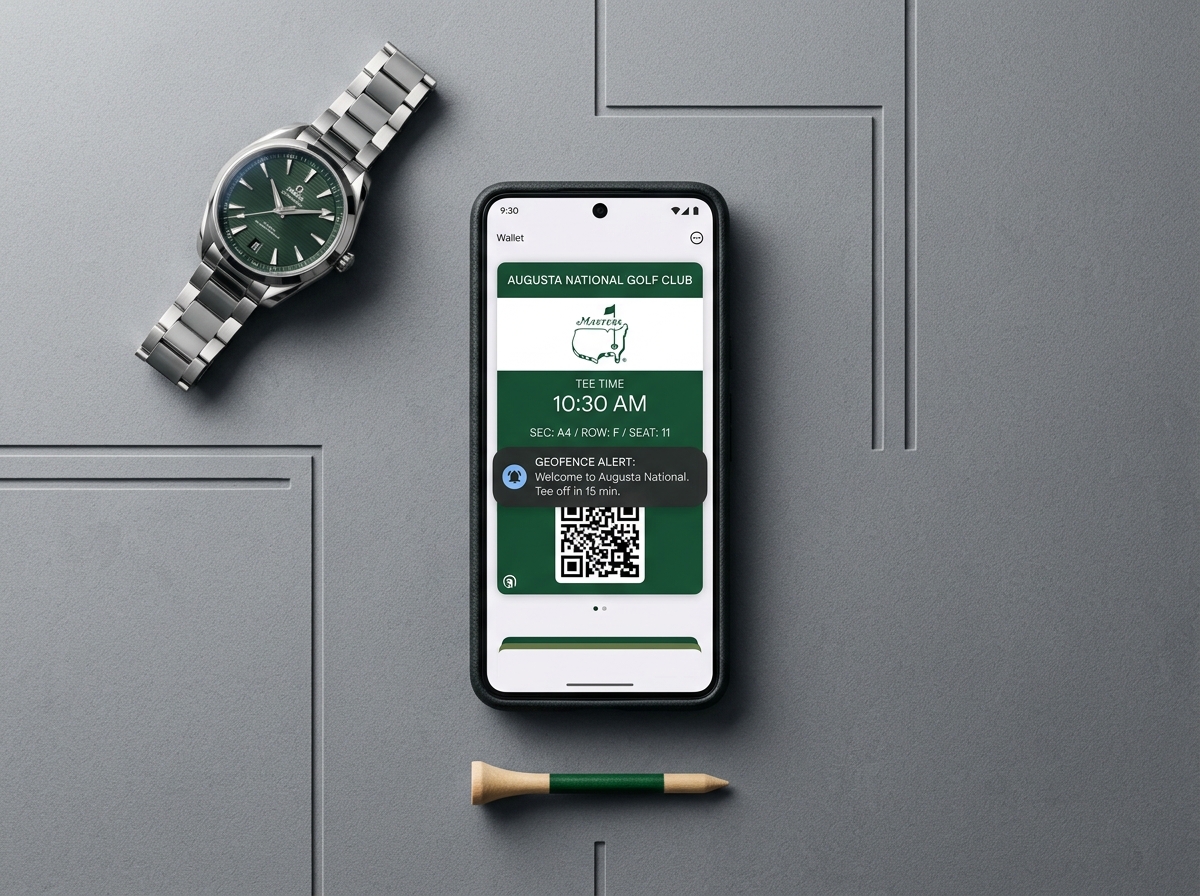
As a member’s vehicle rolls through the club gates, native GPS geofencing triggers their digital membership pass to automatically surface on their smartphone lock screen. One swipe reveals their current handicap index, account barcode, and bag-drop details. The staff knows exactly who has arrived before the vehicle's trunk is even opened.
Real-Time Course Alerts
When a frost delay hits, course superintendents can push a silent update directly to the face of the wallet pass via the tiketo management portal. The text morphs in real time (e.g., "Frost Delay: All Tee Times Pushed 30 Mins"), and a push notification lands cleanly on the member's locked screen without cluttering their email inbox.

Unified POS Charging
The digital pass acts as an integrated internal currency. Whether buying a sleeve of balls in the pro shop or ordering a round of drinks on the verandah, a single scan of the wallet pass instantly verifies identity, applies corporate member discounts, and logs the charge back to their central account profile.
Dynamic Academy Progress Tracking
When a player purchases a package of lessons with the Head Professional, an automated Academy Pass is instantly delivered to their native wallet. The back of the digital card dynamically displays their remaining balance, updating automatically the second a training session is marked complete by the instructor.
Operational Reality: The 36-Hole Transition
Consider the case of a high-end 36-hole golf resort managing both a private membership base and premium resort daily-fee play. The club was spending thousands annually printing physical plastic membership cards and replacement gate fobs. More critically, their pro-shop retail capture rate among members was dropping because checkout lines were backing up during tournament mornings. The club deployed a unified digital pass scheme via tiketo.eu. Instead of waiting for a physical packet in the mail, new members received a secure link via text during onboarding. With a single tap, their personalized club credential was securely saved into their phone's native wallet infrastructure. The operational results over a 90-day cycle altered their baseline metrics: **94% Pass Adoption:** Members overwhelmingly preferred the native wallet pass over the previous physical card framework. **28% Increase in Pro-Shop Average Order Value (AOV):** Friction-free checkout scanning reduced front-desk lines, encouraging members to complete secondary retail purchases rather than walking away. **Zero Administrative Waste:** The administrative staff entirely eliminated the manual labor, shipping costs, and time delays associated with printing and replacing physical badges. Modern luxury is defined by the absolute elimination of friction. By utilizing the native smartphone utilities your members use every single day for payments and travel, your club delivers an elite, unscripted experience that protects your operating margins and deepens member affinity. Eliminate your technical debt and meet your players exactly where they live, using a single infrastructure promise: ONE PLATFORM. EVERY WALLET.
Closing Insight
Optimize Your Resort Operations Is your club still printing plastic membership cards or struggling with low app adoption? Download our Golf Operations Digital Infrastructure Checklist. Learn how to evaluate your current POS and PMS systems for native wallet integration.
More from the tiketo Blog
How to Build a Hotel Loyalty Program Without a Big Tech Budget
Independent hotels don't need enterprise software to run a loyalty programme. Here's a practical, right-sized framework — built on a wallet pass.
How Mobile Wallet Passes Increase Direct Bookings for Hotels
OTAs take 15–30% per booking. Here's how mobile wallet passes shift guests to direct — and keep them there. A practical guide for independent hotels.
Mobile Check-In, Room Keys & Loyalty in One Pass: Is It Possible?
Can one digital hotel pass handle check-in, room key access and loyalty? Here's the honest answer — what's possible today, what needs hardware, and how to start.
Google Wallet Hotel Passes: The Complete Hospitality Guide
Everything hotel teams need to know about Google Wallet passes — pass types, push notifications, geo-triggers & real results. Powered by tiketo.
Apple Wallet for Hotels: How to Engage Guests Without an App
Apple Wallet is on every iPhone. Yet most hotels use it for one thing: a room door key. The pass — Apple's most powerful hospitality capability — is going almost entirely unused. Here's the full picture.
Push Notifications vs. Email: Which Works Better for Hotel Guest Communication?
If you manage guest communications at a hotel, there is a good chance you are making channel decisions based on email open rate data that is significantly inflated.
How to Personalise the Hotel Guest Experience at Scale
71% of hotel brands say personalisation is a priority, but only 15% believe they are doing it effectively. Discover a practical framework for bridging the execution gap without a full CRM overhaul.
5 Hospitality Trends Redefining the Guest Experience in 2026
From AI-powered bookings to digital wallet loyalty, discover the 5 data-backed trends redefining the guest experience in 2026 — and what they mean for your property.
How La Bottega Turns Guests Into Regulars.
Like many successful restaurants, La Bottega faced a familiar challenge: guests loved the experience, but paper loyalty cards weren't enough.
What Is a Digital Guest Journey and How to Map It for Your Hotel
Most hotels can describe what happens at check-in. Far fewer can describe what happens in the twelve touchpoints before a guest arrives, or the eight that follow after checkout. That gap is exactly what a digital guest journey map is designed to close.
Why Guests Don't Download Hotel Apps — And What to Do Instead
Over 70% of guests drop off before completing hotel app registration. Here's why — and the no-download alternatives that actually work.
Loyalty Programs for Boutique Hotels: What Actually Works
Most boutique hotels copy chain loyalty mechanics and wonder why it fails. Here's what actually works — and why your advantage is emotional, not transactional.