Google Wallet Hotel Passes: The Complete Hospitality Guide
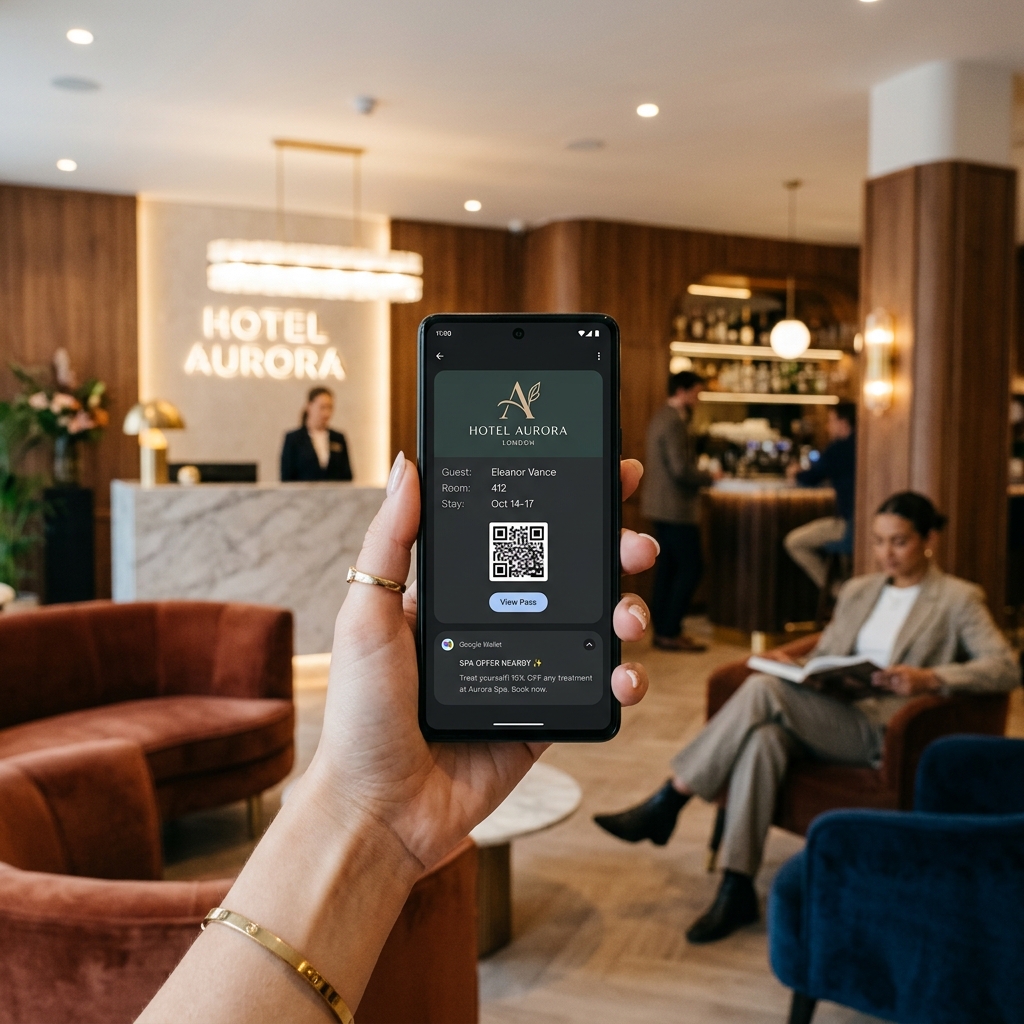
Everything hotel teams need to know about Google Wallet passes — pass types, push notifications, geo-triggers & real results. Powered by tiketo.
Android holds approximately 70–72% smartphone market share across Europe. In Spain, the Netherlands, and Belgium — the core markets for independent and boutique hotels that tiketo works with — the majority of arriving guests carry an Android device. That device has Google Wallet pre-installed. And Google Wallet, as of 2025, is a significantly more capable hospitality engagement platform than most hotel teams realise. Most of the content written about Google Wallet and hotels focuses on one narrow use case: the digital room key... That feature is real and growing, but it requires NFC door hardware and a PMS integration that puts it out of reach for most independent properties in the near term. What this guide covers is the broader capability set: the pass types available to hotels, the engagement features that Google has been systematically expanding through 2024 and 2025, how Google Wallet compares to Apple Wallet for hotel use cases, and what an independent hotel in Europe actually needs to get started. No room hardware required.
Why Google Wallet Matters More Than Ever for European Hotels
The case for Google Wallet as a hotel engagement channel rests on a single, underappreciated fact: it is the primary digital wallet for the majority of your guests. In a market where Apple Wallet receives significantly more editorial attention in English-language hospitality media, Google Wallet is actually the dominant platform for the guest populations that Spanish and Benelux hotels serve. Android's 70–72% European market share means that for a hotel in Madrid, Amsterdam, or Brussels, a Google Wallet pass strategy will reach a materially larger share of guests than an Apple Wallet-only approach. A dual-platform strategy — supporting both wallets simultaneously — is the correct approach for any hotel operating in Europe, and is what platforms like tiketo deliver as standard.
Google Wallet in 2025: a platform that has grown significantly
Google Wallet has expanded substantially as an engagement platform since its relaunch in 2022. Key developments relevant to hotels include: • Nearby Passes Geofence Notifications extended to all standard pass types (October 2025) • Gmail Auto-Import launched (October 2025) — automatically adds passes from Gmail when Smart Features are enabled. • Granular field update notifications (Google I/O 2025) — trigger specifically when a defined field changes. • Value Added Opportunities (Google I/O 2025) — personalised recommendations and exclusive offers within the pass.
Platform trajectory note: Google announced all of the above features at Google I/O 2025 and in October 2025 platform updates. The Google Wallet API is actively and rapidly expanding. Hotels that build pass programmes now are positioning themselves ahead of a capability curve that is moving quickly in their favour.
Google Wallet Pass Types: What's Available for Hotels
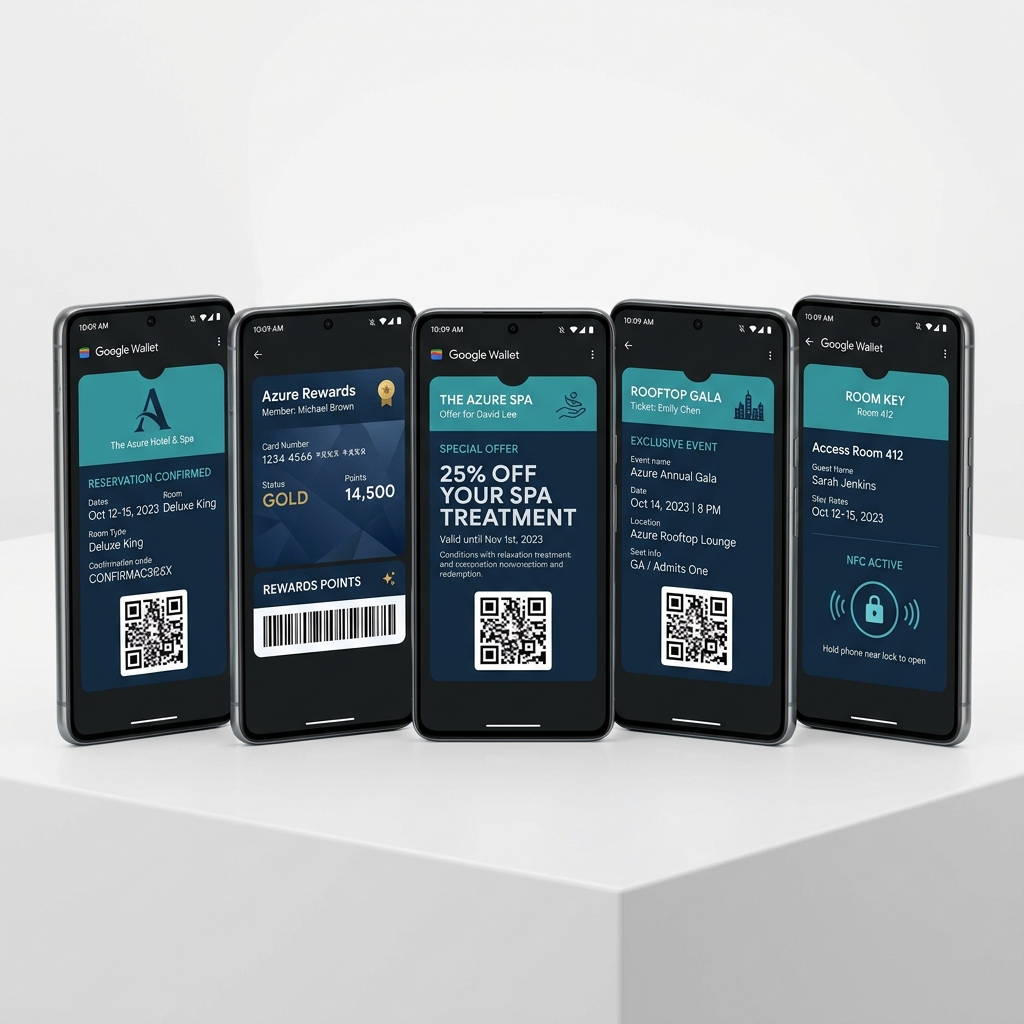
Google Wallet supports five pass types relevant to hotel operations: • Generic Pass: Flexible branded card. Yes (updatable). Guest stay pass, pre-arrival, in-stay communication. • Loyalty Card: Points & tier tracking. Yes (live balance updates). Hotel loyalty programme, post-stay retention. • Offer / Voucher: Discount or promotion. Yes. Upsell offers, spa packages, F&B promotions. • Event Ticket: Access pass. Yes. Hotel events, dining reservations, experiences. • Hotel Room Key: NFC door access. Partial (check-in activation required). Digital key (requires NFC hardware). For most independent hotels deploying a guest engagement programme, the relevant combination is: Generic Pass for the primary guest stay pass, Loyalty Card for repeat guest and post-stay retention, and Offer / Voucher for specific upsell or promotional passes.
How Push Notifications and Geo-Triggers Work on Google Wallet Passes
Google limits both direct message and field update notification types to a maximum of 3 per pass per 24-hour period, which is both a responsible constraint and a useful forcing function for hotel teams to be selective. Nearby Passes is a Google Wallet feature — extended to all standard pass types in October 2025 — that fires a push notification on the guest's lock screen when their device enters a defined geographic area. Hotels configure up to 10 location coordinates per pass. When a guest with the pass in their wallet enters the defined radius, Google Wallet sends a contextual notification.
Performance benchmark: A Zoo case study on Google's own case study platform used wallet pass push notifications and recorded a 75% open rate — more than three times the genuine engagement rate of hospitality email. Salomon's digitised loyalty pass on Google Wallet drove a 3x revenue increase.
Google Wallet vs Apple Wallet for Hotels: A Side-by-Side Comparison
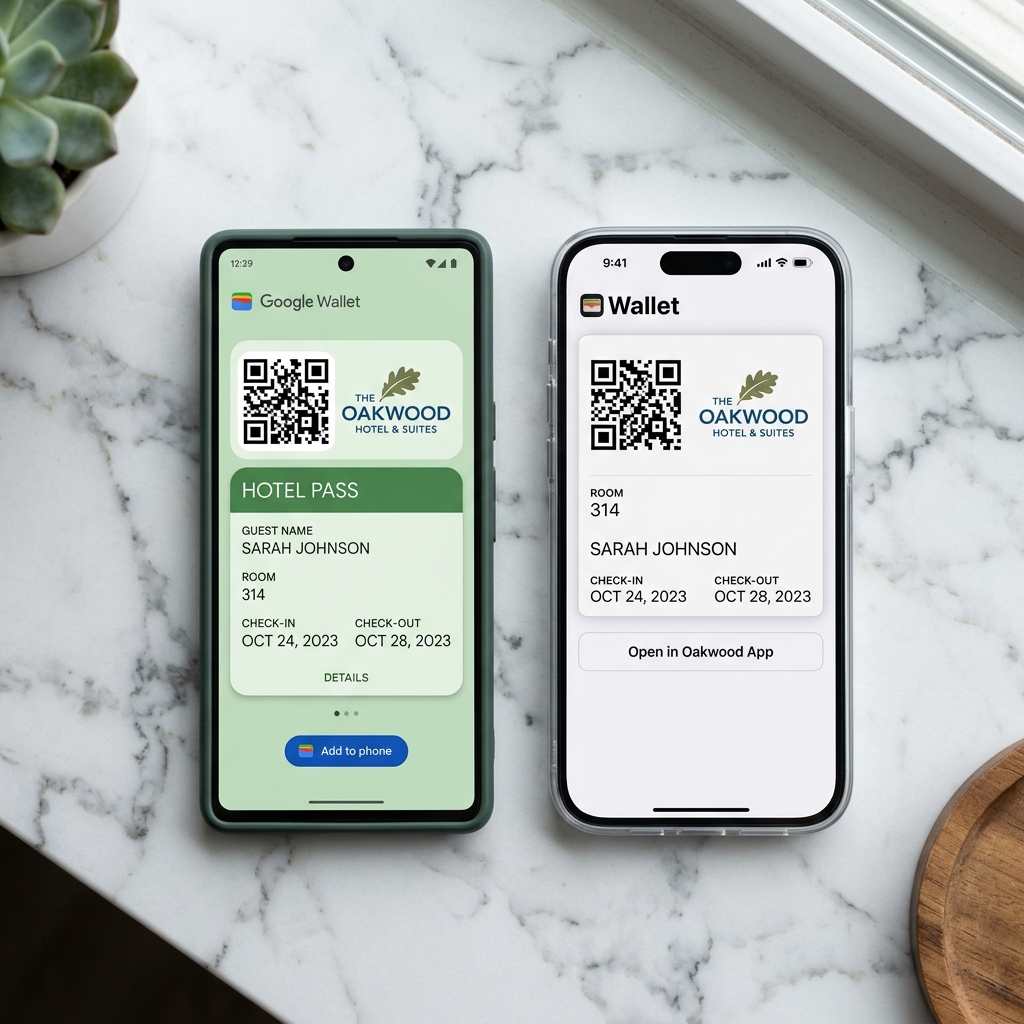
Hotel teams managing a dual-platform pass programme need to understand where Google Wallet and Apple Wallet align. Both support real-time pass updates, push notifications, and geo-triggered notifications. However, Google Wallet includes Gmail Auto-Import (automatic if Smart Features enabled, Oct 2025), which Apple Wallet does not have. Google Wallet and Apple Wallet are now functionally equivalent for core pass engagement use cases. Google's geo-trigger capability (Nearby Passes) is now on a par with Apple's location-based notification support.
Gmail Auto-Import: The Adoption Advantage European Hotels Should Be Using
When a guest has Gmail's Smart Features enabled, Google automatically identifies passes in incoming emails and adds them to Google Wallet without any manual action from the guest. This removes the single largest friction point in the pass adoption journey. Rather than relying on the guest to see, tap, and act on the 'Add to Google Wallet' button, the pass appears in their wallet automatically.
What Your Hotel Needs to Get Started
Implementing a Google Wallet pass programme via tiketo requires no in-house development resource and no hardware investment beyond your existing PMS and email infrastructure. What you need: 1. A pass management platform (tiketo) 2. Booking data feed (guest name, arrival date, room type) 3. Updated booking confirmation email 4. A notification content calendar What you do not need: • NFC door hardware • A hotel app • A Google Cloud account or developer resource • A large budget Typical implementation timeline: four to six weeks.
Closing Insight
Google Wallet is the primary digital wallet for the majority of hotel guests in Europe — and it is a materially more capable engagement platform than most hospitality teams have explored. The hotels in Spain and Benelux that build Google Wallet pass programmes in 2025 and 2026 are doing so ahead of a platform capability curve that is moving quickly. Ready to build a Google Wallet pass programme for your hotel? tiketo manages Google Wallet (and Apple Wallet) passes for independent and boutique hotels across Spain and Benelux.
Frequently Asked Questions
Q: What is a Google Wallet hotel pass?
A: A Google Wallet hotel pass is a digital card stored in the Google Wallet app on a guest's Android device. It displays branded hotel content and can send push notifications to the guest's lock screen. It is distinct from digital room keys (NFC door access).
Q: Does Google Wallet work on all Android devices?
A: Google Wallet is pre-installed on Android devices running Android 5.0 and higher. Guests do not need to download anything separately.
Q: How do Google Wallet push notifications work for hotels?
A: Hotels send push notifications through the Google Wallet API. Both direct messages and field update notifications are limited to 3 per pass per 24-hour period.
Q: What is the difference between Google Wallet and Apple Wallet for hotels?
A: Both platforms support equivalent core engagement capabilities. The key differences are market share (~70-72% Android in Europe) and Gmail Auto-Import (Google Wallet automatically adds passes for users with Smart Features enabled).
Q: Does Google Wallet comply with GDPR for European hotels?
A: Yes. The guest's affirmative action of adding a pass to their Google Wallet constitutes a clear, freely given consent signal.
More from the tiketo Blog
How to Build a Hotel Loyalty Program Without a Big Tech Budget
Independent hotels don't need enterprise software to run a loyalty programme. Here's a practical, right-sized framework — built on a wallet pass.
How Mobile Wallet Passes Increase Direct Bookings for Hotels
OTAs take 15–30% per booking. Here's how mobile wallet passes shift guests to direct — and keep them there. A practical guide for independent hotels.
Mobile Check-In, Room Keys & Loyalty in One Pass: Is It Possible?
Can one digital hotel pass handle check-in, room key access and loyalty? Here's the honest answer — what's possible today, what needs hardware, and how to start.
Apple Wallet for Hotels: How to Engage Guests Without an App
Apple Wallet is on every iPhone. Yet most hotels use it for one thing: a room door key. The pass — Apple's most powerful hospitality capability — is going almost entirely unused. Here's the full picture.
Push Notifications vs. Email: Which Works Better for Hotel Guest Communication?
If you manage guest communications at a hotel, there is a good chance you are making channel decisions based on email open rate data that is significantly inflated.
How to Personalise the Hotel Guest Experience at Scale
71% of hotel brands say personalisation is a priority, but only 15% believe they are doing it effectively. Discover a practical framework for bridging the execution gap without a full CRM overhaul.
5 Hospitality Trends Redefining the Guest Experience in 2026
From AI-powered bookings to digital wallet loyalty, discover the 5 data-backed trends redefining the guest experience in 2026 — and what they mean for your property.
How La Bottega Turns Guests Into Regulars.
Like many successful restaurants, La Bottega faced a familiar challenge: guests loved the experience, but paper loyalty cards weren't enough.
What Is a Digital Guest Journey and How to Map It for Your Hotel
Most hotels can describe what happens at check-in. Far fewer can describe what happens in the twelve touchpoints before a guest arrives, or the eight that follow after checkout. That gap is exactly what a digital guest journey map is designed to close.
Why Guests Don't Download Hotel Apps — And What to Do Instead
Over 70% of guests drop off before completing hotel app registration. Here's why — and the no-download alternatives that actually work.
Loyalty Programs for Boutique Hotels: What Actually Works
Most boutique hotels copy chain loyalty mechanics and wonder why it fails. Here's what actually works — and why your advantage is emotional, not transactional.
The Friction of Prestige: Why Elite Golf Resorts Are Replacing Plastic Cards with Native Device Infrastructure
Traditional golf operators equate plastic cards with prestige. Discover why top-tier clubs are transitioning to native smartphone wallets to capture lost secondary revenue.